Footwear brands operate in a highly dynamic environment where managing product variations, demand fluctuations, and customer expectations can quickly become complex.
Unlike standard businesses, they deal with size, color, and style matrices that significantly increase SKU volume and make inventory management more challenging. Seasonal demand shifts and frequent returns or exchanges further add to operational pressure.
While generic ERP systems can handle basic processes, they often fall short when it comes to addressing these industry-specific needs without heavy customization. This is why choosing the right ERP becomes critical.
In this blog, we’ll compare the top ERP systems for footwear brands based on their features, cost, and overall operational impact to help you make an informed decision.
ERP Comparison Table (Features, Cost, Fit)
Footwear brands need an ERP that balances scalability, cost, and industry-specific functionality like size-color matrix handling and omnichannel operations. Below is a quick comparison of the top ERP systems based on their real-world fit for footwear businesses.
| ERP System | Best For | Key Strength | Customization Need | Cost Range | Scalability |
|---|---|---|---|---|---|
| NetSuite | Growing brands | Cloud + omnichannel ERP with strong real-time visibility | Medium | $$$ | High |
| Dynamics 365 | Manufacturing-heavy brands | Deep supply chain and production management | High | $$$$ | High |
| SAP | Large enterprises | Advanced planning and global-scale operations | Very High | $$$$$ | Very High |
| Odoo | SMBs | Affordable, modular, and flexible ERP system | Medium | $$ | Medium |
Each ERP system serves a different stage of business maturity. While NetSuite and Dynamics 365 are better suited for scaling and complex operations, Odoo offers flexibility at a lower cost. SAP is ideal for enterprise-grade global operations, while footwear-specific ERPs work well for brands that want ready-made industry functionality without heavy customization.
Top ERP Systems for Footwear Brands
Choosing the right ERP depends on how well the system handles footwear-specific challenges like SKU complexity, omnichannel sales, and production workflows. Below is a closer look at the top ERP systems and how they perform in real-world footwear operations.
1. NetSuite ERP
Best For
Scaling footwear brands and omnichannel businesses
Why It Stands Out
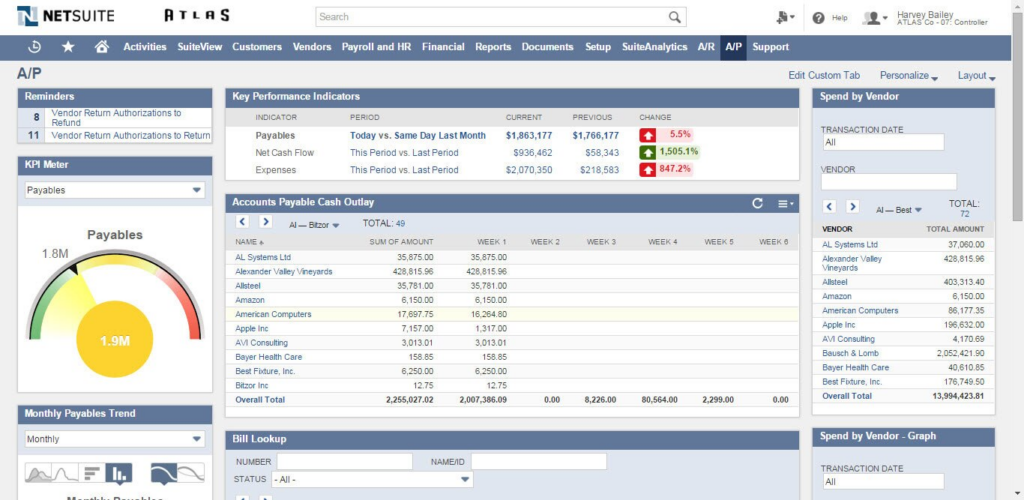
NetSuite stands out because it offers a fully unified cloud ERP, where inventory, ecommerce, financials, and order management all work together in one system. Instead of relying on multiple disconnected tools, footwear brands can manage everything from a single platform, improving visibility and decision-making.
It is especially strong for growing brands because of its scalability and real-time reporting capabilities, allowing businesses to expand operations without switching systems.
For footwear companies, this matters because managing thousands of SKUs across sizes and colors requires accurate, real-time data. NetSuite’s flexibility also allows customization for workflows like returns, seasonal collections, and omnichannel fulfillment.
⭐⭐⭐⭐⭐
Key Features
- NetSuite provides strong inventory and order management with real-time tracking across warehouses and sales channels. This helps footwear brands avoid stockouts and overstock situations.
- Its SuiteCommerce integration connects backend ERP processes directly with ecommerce, enabling seamless order processing and customer experience across online and offline channels.
- Custom workflows can be built to handle footwear-specific needs such as size and color matrix management, returns processing, and demand-based inventory allocation. This makes it adaptable to both retail and manufacturing models.
Limitations
NetSuite often requires customization to fully align with footwear-specific workflows. While this flexibility is a strength, it can increase implementation time and cost if not planned properly.
2. Microsoft Dynamics 365
Best For
Mid-sized to enterprise footwear manufacturers
Why It Stands Out
Microsoft Dynamics 365 is known for its strong financial and supply chain capabilities, making it a good fit for footwear manufacturers with complex production and procurement processes. It integrates well with other Microsoft tools, which is useful for organizations already in that ecosystem.
⭐⭐⭐⭐
Key Features
- It offers robust finance modules, advanced supply chain management, and production planning features. This helps footwear manufacturers manage raw materials, production cycles, and distribution more efficiently.
- The system also supports detailed reporting and analytics, allowing better control over costs and operations.
Limitations
Implementation can be complex and time-consuming. It often requires significant configuration and technical expertise, which can delay time to value.
3. SAP Business One / S/4HANA
Best For
Large footwear enterprises
Why It Stands Out
SAP solutions are built for large-scale operations and global businesses. They offer deep functionality for manufacturing, compliance, and multi-country operations, making them ideal for enterprises with complex supply chains.
⭐⭐⭐⭐⭐
Key Features
- SAP provides advanced production planning, detailed supply chain control, and strong support for global operations. It is particularly effective for managing large manufacturing setups and multi-location businesses.
- It also offers deep analytics and reporting capabilities, helping enterprises make data-driven decisions at scale.
Limitations
SAP systems are expensive and require long implementation cycles. They also demand significant internal resources, which may not be practical for smaller or mid-sized footwear brands.
4. Odoo ERP
Best For
Small to mid-sized footwear brands
Why It Stands Out
Odoo is popular for its modular and cost-effective approach, allowing businesses to start with basic features and expand as needed. It’s a flexible option for smaller footwear brands with limited budgets.
⭐⭐⭐☆☆
Key Features
- Odoo offers essential modules for inventory, sales, and accounting, along with the flexibility to add more features over time. Its open-source nature allows customization, making it adaptable to different business needs.
- It is also relatively easier to implement compared to larger ERP systems, making it suitable for growing companies.
Limitations
Odoo requires customization to handle footwear-specific workflows like size and color matrix management. Without proper setup, it may not fully support industry complexity.
Key Features to Look for in Footwear ERP Systems
Footwear businesses operate with high product complexity due to variations in size, color, and style. A strong ERP system for footwear should simplify this complexity while improving visibility across inventory, production, and sales. Below are the key features that footwear brands should prioritize when selecting an ERP system.
1. Style, Size, and Color Matrix Management
A footwear ERP should efficiently handle product variations under a single style instead of creating separate SKUs for each combination. This helps reduce SKU explosion and keeps product data more structured and manageable.
It also ensures that inventory is tracked accurately at every variation level, reducing the chances of overselling or stock mismatches. This is especially important for brands dealing with seasonal collections and fast-moving styles.
- Handle multiple variants under one product
- Reduce SKU complexity
- Improve inventory accuracy
2. Advanced Inventory and Warehouse Management
Inventory management is one of the most critical aspects for footwear brands, especially when dealing with multiple warehouses or retail locations. A strong ERP provides real-time visibility into stock levels across all channels.
This helps businesses avoid stockouts, overstocking, and inefficient stock transfers between locations. It also improves order fulfillment speed and accuracy.
- Multi-location inventory tracking
- Real-time stock visibility
- Barcode/RFID integration
3. Production Planning and BOM Management
Footwear manufacturing requires precise planning due to multiple production stages and material dependencies. A good ERP should support structured production workflows with clear visibility into each stage.
It also helps in managing materials efficiently and tracking work-in-progress items to avoid delays or shortages. This improves overall production efficiency and planning accuracy.
- Multi-level BOM
- Work-in-progress tracking
- Production scheduling
4. Omnichannel Order and Sales Management
Modern footwear brands sell across multiple channels, including ecommerce, retail stores, and wholesale distributors. An ERP should unify all these channels into a single system.
This ensures that orders are processed centrally, reducing duplication and improving fulfillment speed. It also helps maintain consistent pricing and availability across all channels.
- Ecommerce + POS + wholesale integration
- Centralized order processing
5. Returns and Exchange Management
Returns and exchanges are very common in footwear due to size and fit issues. A strong ERP should simplify this process through automated workflows.
This helps reduce manual effort, speeds up refunds, and improves customer satisfaction. It also provides better visibility into return patterns for business insights.
- RMA workflows
- Faster refund and exchange handling
6. Reporting and Demand Forecasting
Accurate reporting is essential for footwear brands to understand sales performance and inventory movement. An ERP should provide detailed insights at size and style levels.
Demand forecasting helps businesses plan better for seasonal trends and avoid excess inventory or stock shortages. Real-time dashboards further support quick decision-making.
- Size-level demand insights
- Sales trend analysis
- Real-time dashboards
Why Footwear Brands Need Specialized ERP Systems
Footwear brands operate in a highly complex environment where product variations, fast-changing demand, and multi-channel operations create constant operational challenges. Unlike standard retail businesses, footwear companies must manage thousands of SKU combinations, making ERP selection a critical decision.
A specialized ERP like NetSuite for footwear helps bring structure, visibility, and control across the entire value chain.
Reason #1: Industry-Specific Challenges
Footwear businesses deal with operational complexity that goes beyond traditional inventory management. Each product comes in multiple sizes, colors, and styles, which leads to SKU explosion and makes tracking difficult without a robust system.
On top of that, demand is highly seasonal and trend-driven, meaning inventory planning must be highly accurate to avoid overstock or stockouts. Brands also operate across multiple sales channels, including retail stores, ecommerce platforms, and distributors, which adds another layer of complexity.
Returns and exchanges are also more frequent in footwear due to sizing issues, making reverse logistics a critical part of operations. Additionally, many brands rely on global sourcing and distributed production networks, which require strong coordination and real-time visibility.
- SKU explosion (size + color combinations)
- Seasonal and trend-driven demand
- Multi-channel sales (retail, ecommerce, distributors)
- Returns and exchange complexity
- Global sourcing and production
Reason #2: Limitations of Generic ERP
Generic ERP systems are designed for broad business use cases and often struggle with the specific demands of footwear operations. They usually require heavy customization to handle size and color matrices or complex inventory structures.
This customization not only increases implementation time but also makes the system harder to maintain in the long run. As a result, businesses may face delays in deployment and higher overall ownership costs.
Over time, these limitations can reduce operational efficiency and force companies to invest additional resources just to make the system work as needed.
- Requires heavy customization
- Slower implementation
- Higher long-term cost
Now that we’ve compared the leading ERP systems, the next important step is understanding the cost comparison of the footwear ERP systems to make the right decision.
Cost Breakdown of ERP for Footwear Brands
ERP implementation for footwear brands is not just about software licensing. The real cost comes from implementation, customization, training, and long-term support. In many cases, implementation alone can account for a major portion of the total ERP investment, often exceeding the software cost itself.
Below is a clear breakdown of where ERP costs come from and what footwear brands should expect when budgeting.
A. Typical Cost Components
ERP costs are made up of multiple layers, and each one plays a critical role in the overall investment. Software subscription is just the starting point, while implementation and post-go-live support often form the largest share of expenses.
For footwear brands, additional effort is often needed to configure size-color matrices, inventory workflows, and omnichannel operations, which can increase customization and setup effort.
- Licensing/subscription
- Implementation
- Customization
- Training and support
B. Estimated Cost Ranges
ERP costs vary depending on company size, complexity, and selected platform. Small footwear brands typically start with lower-cost cloud ERP systems, while mid-market and enterprise brands invest significantly more due to multi-channel operations and global supply chains.
On average, SMB ERP projects may start around $10K–$50K annually, while mid-market implementations can range from $50K–$250K+. Large enterprise ERP systems often exceed $250K+, especially when global rollout and advanced customization are involved.
- SMB ERP: $10K–$50K annually
- Mid-market ERP: $50K–$250K+
- Enterprise ERP: $250K+
C. Hidden Costs
Beyond visible licensing and implementation fees, there are several hidden costs that footwear brands often underestimate. These costs usually emerge during integration, data migration, and ongoing system maintenance.
Integrating ERP with ecommerce platforms, POS systems, and third-party logistics providers can significantly increase project cost. Similarly, migrating and cleaning legacy data is often more time-consuming than expected.
Ongoing support and system upgrades also add to long-term ownership costs, making total investment higher than initial estimates.
- Integrations
- Data migration
- Ongoing support
Operational Impact of ERP on Footwear Businesses
A footwear-focused ERP system goes beyond basic process automation. It directly improves how brands manage inventory, production, forecasting, and customer experience across multiple channels. By centralizing data and enabling real-time visibility, ERP systems help footwear businesses operate more efficiently and make faster, data-driven decisions.
Improved Inventory Accuracy and Stock Visibility
One of the biggest operational benefits of ERP in footwear is improved inventory accuracy across all sizes, colors, and styles. Real-time tracking ensures that stock levels are always updated across warehouses, stores, and ecommerce channels.
This helps reduce common footwear challenges like stockouts of popular sizes or overstock of slow-moving variants. With better visibility, brands can also optimize replenishment and reduce carrying costs.
- Real-time inventory tracking across channels
- Reduced stockouts and overstock situations
- Better control of size and color variant availability
Faster Production Cycles and Manufacturing Efficiency
ERP systems streamline footwear production planning by improving coordination between design, materials, and manufacturing teams. This reduces delays and improves overall production efficiency.
With better scheduling and visibility into work-in-progress (WIP), footwear manufacturers can plan production more accurately and respond faster to demand changes, especially during seasonal peaks.
- Improved production planning and scheduling
- Better visibility into work-in-progress (WIP)
- Faster response to seasonal demand shifts
Reduced Operational Costs Through Automation
A footwear ERP reduces dependency on manual processes by automating key workflows such as order processing, inventory updates, and procurement. This significantly reduces human error and operational overhead.
Automation also helps eliminate repetitive tasks, allowing teams to focus on higher-value activities like demand planning and customer experience improvement.
- Automation of order and inventory workflows
- Reduced manual data entry and errors
- Lower operational overhead and processing costs
Better Demand Forecasting and Footwear Sales Planning
ERP systems provide data-driven insights that help footwear brands forecast demand more accurately. By analyzing historical sales data, seasonal trends, and size-level performance, brands can make better inventory decisions.
This improves footwear demand planning, reduces excess stock, and ensures popular styles are always available during peak seasons.
- Size-level demand forecasting and analysis
- Sales trend identification for footwear collections
- Improved seasonal inventory planning
Enhanced Customer Experience and Omnichannel Fulfillment
A strong footwear ERP improves the overall customer experience by ensuring faster order fulfillment and smoother returns management. This is especially important for ecommerce footwear brands where size-related returns are common.
With integrated systems across ecommerce, POS, and warehouse operations, brands can deliver consistent service across all channels and improve customer satisfaction.
- Faster order processing and fulfillment
- Efficient returns and exchange (RMA) handling
- Consistent omnichannel customer experience
How to Choose the Right ERP for Your Footwear Brand
Selecting the right ERP system for a footwear business is not just a technology decision, it directly impacts inventory accuracy, production efficiency, and customer experience. The best choice depends on your business size, operating model, and long-term growth plans. A structured evaluation helps ensure the ERP aligns with both current needs and future scalability.
Based on Business Size
ERP selection often starts with company size because it determines the level of complexity and scalability required. Smaller footwear brands usually need flexibility and affordability, while larger enterprises need advanced control and global capabilities.
Choosing the right fit ensures you avoid overpaying for features you don’t need or underinvesting in a system that cannot scale.
- Startup → Odoo / lightweight ERP (low cost, modular setup, quick implementation)
- Mid-size → NetSuite / Microsoft Dynamics 365 (balanced scalability, omnichannel support, stronger automation)
- Enterprise → SAP S/4HANA (advanced production planning, global operations, high scalability)
Based on Business Model
Footwear ERP requirements vary significantly depending on whether the business is manufacturing-driven, ecommerce-led, or retail-focused. Each model needs different strengths from an ERP system.
For example, manufacturing-heavy brands need strong production planning, while ecommerce brands need real-time inventory sync across channels.
- Manufacturing-heavy → SAP / Dynamics 365 (strong BOM, production scheduling, supply chain control)
- E-commerce-focused → NetSuite ERP (strong omnichannel, real-time inventory, SuiteCommerce integration)
- Retail chains → Industry-specific ERP solutions (POS integration, store-level inventory visibility)
Key Decision Factors
Beyond size and business model, several strategic factors should guide ERP selection. These determine how well the system performs in real-world footwear operations like SKU management, seasonal planning, and returns handling.
Ignoring these factors often leads to higher customization costs and slower implementation.
- Budget (licensing, implementation, and long-term ownership costs)
- Customization needs (especially for size-color matrix and footwear workflows)
- Integration requirements (ecommerce, POS, logistics, and marketplaces)
- Growth plans (scalability for new channels, markets, and product lines)
Choosing the right ERP is ultimately about balancing operational fit with long-term scalability. Once these factors are clear, the next step is understanding which features actually matter most for footwear operations and how they drive efficiency across inventory, production, and sales.
Final Thoughts
There is no one-size-fits-all ERP for footwear brands. Each business has different needs depending on its size, sales channels, production setup, and growth stage. The right decision should always be driven by industry-specific requirements rather than just brand popularity or cost alone.
It’s also important to strike the right balance between features, cost, and scalability. Many footwear brands start with basic requirements but later expand into omnichannel retail, which requires a more flexible ERP foundation. Starting with core modules and scaling over time is often the most practical approach.
NetSuite Alliance Partner
Working with a NetSuite Alliance Partner can simplify the entire ERP selection and implementation process. With the right guidance, footwear brands can ensure the system is configured correctly from day one and aligned with their operational needs.
A partner like Folio3 can help with:
- End-to-end NetSuite implementation tailored for footwear businesses
- Customization for size, color, and style matrix management
- Integration with ecommerce, POS, and supply chain systems
- Industry-specific optimization for better performance and scalability
Folio3 also brings proven experience across retail and apparel-focused ERP projects, including successful implementations for brands like Naked Wardrobe, helping them achieve better inventory control and operational efficiency.
Get in touch with our team to implement a scalable solution for your footwear brand!
FAQs
1. What is the best ERP for footwear brands?
The best ERP depends on your business size and needs. NetSuite and Microsoft Dynamics 365 are ideal for growing and mid-sized footwear brands, while SAP is better suited for large enterprises. Odoo works well for small businesses due to its affordability and modular structure.
2. Why do footwear brands need a specialized ERP system?
Footwear brands deal with complex product variations like size, color, and style combinations. They also face seasonal demand shifts, high return rates, and multi-channel sales. A specialized ERP helps manage these challenges more efficiently than a generic system.
3. Is NetSuite good for footwear businesses?
Yes, NetSuite is a strong choice for footwear brands, especially those operating across ecommerce and retail channels. It provides real-time inventory visibility, supports complex product structures, and integrates well with omnichannel sales systems.
4. How much does an ERP system cost for footwear companies?
ERP costs vary depending on business size and complexity. Small businesses may spend $10K–$50K annually, mid-sized companies $50K–$250K+, and large enterprises $250K or more, including implementation and customization.
5. Can ERP systems handle size and color variations in footwear?
Yes, modern ERP systems like NetSuite, Dynamics 365, and SAP can handle size and color matrices through product variant management. However, some systems may require customization to support footwear-specific workflows fully.