Are you unsure if it’s time to transition from SuiteCommerce to Shopify Plus? Here are the biggest signs your business has outgrown its current platform and what to do next.
Key Takeaways
- Businesses usually switch platforms because everyday tasks become slower, not because the platform suddenly stops working.
- If store updates, integrations, or marketing campaigns take longer than they should, it may be time to consider a migration.
- Shopify Plus gives growing businesses more flexibility, a larger app ecosystem, and easier store management without replacing NetSuite ERP.
- A successful SuiteCommerce to Shopify Plus migration starts with planning your data, integrations, and customer experience before moving anything.
- The best time to migrate is before platform limitations begin affecting sales, customers, and business growth.
Your E-commerce Platform Gives You Warning Signs – Are You Noticing Them?
Most businesses don’t decide to migrate overnight. The decision usually builds over time. A promotion takes longer to launch than expected. Your marketing team waits on developers for simple changes.
Adding a new integration becomes another project instead of a quick project improvement. Individually, these moments seem small. Together, they slow your business down.
That’s often when companies begin moving from SuiteCommerce to Shopify Plus. Not because SuiteCommerce has stopped working, but because the business has grown beyond what the current setup can comfortably support.
If you’re wondering whether now is the right time to switch, the answer usually isn’t hidden in your software. It’s hidden in the challenges your team deals with every day.
Top Reasons to Switch From Suitecommerce to Shopify Plus
1. Your Store Is Growing Faster Than Your Platform Can Keep Up
Growth is exciting until your e-commerce platform starts struggling to keep pace.
Maybe your product catalog has doubled. You’re selling in new markets, doing inventory management, or introducing new product lines. As your business expands, managing everything becomes more complicated, and tasks that once felt simple begin taking much longer.
If your platform is slowing your team down instead of helping them move faster, it’s one of the clearest reasons to switch from SuiteCommerce to Shopify Plus. You can contact the Shopify Help Center to inquire about the issues as well.
Growth shouldn’t create unnecessary roadblocks. In fact, the next sign often appears even before businesses notice their platform holding them back.
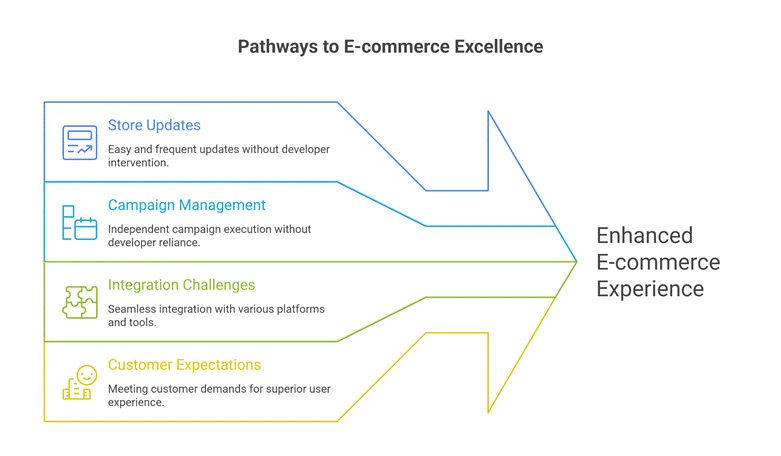
2. Simple Store Updates Have Started Feeling Like Big Projects
Changing a homepage banner shouldn’t require days of planning.
Neither should updating product pages, launching seasonal promotions, or creating a new landing page. When even small changes depend on developers or lengthy approval processes, your business loses the ability to react quickly.
That delay doesn’t just affect your team. It affects customers who expect fresh content, updated offers, and a modern shopping experience every time they visit your store.
And while your internal teams are waiting, your customers are already judging something else.
3. Your Customers Expect More Than Your Store Delivers
Customer expectations continue to rise, especially during checkout. According to Baymard Institute research. Customer expectations have changed.
They expect pages to load quickly, checkout to be simple, and shopping on a mobile phone to feel just as smooth as shopping on a desktop. If your store struggles to deliver that experience, customers may leave before completing their purchase.
This is where many businesses begin looking at the Shopify Plus benefits. The platform is built to create fast, user-friendly shopping experiences while giving merchants the flexibility to keep improving as customer expectations evolve.
Quick Insight: Customers don’t compare your store to your old website. They compare it to the best online shopping experience they’ve had recently.
And speaking of expectations, customers aren’t the only ones who get frustrated. Your internal teams feel it too.
4. Your Marketing Team Keeps Waiting Instead of Launching
Marketing moves quickly. E-commerce platforms should, too.
Whether it’s launching a flash sale, creating a landing page, updating promotions, or testing a new campaign, your marketing team shouldn’t have to wait days for routine changes.
If every update depends on technical resources, opportunities can slip away before your campaign even goes live.
One of the biggest benefits of migrating from SuiteCommerce to Shopify Plus is giving non-technical teams more control over everyday store management, helping them respond faster without relying on developers for every small change.
Of course, marketing isn’t the only team affected. Operations can feel the pressure too.
5. Every New Integration Feels Like Starting From Scratch
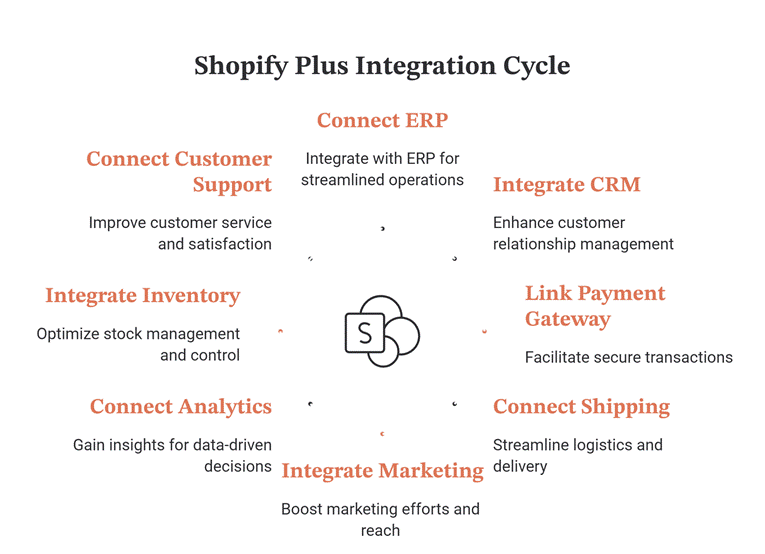
As your business grows, so does the number of systems you rely on.
Your e-commerce platform may need to exchange data with your ERP, CRM, shipping providers, payment gateways, marketing tools, and analytics platforms. These systems should work together instead of creating extra work for your team.
If adding a new integration feels like a major project every time, it may be a sign that your current setup is becoming harder to manage.
A well-planned SuiteCommerce to Shopify Plus migration can simplify this process by making it easier to connect with a wide range of business applications while keeping NetSuite ERP at the center of your operations.
Does This Sound Like Your Business?
If you’ve nodded along to most of these signs, you’re probably not dealing with isolated issues. You’re seeing a pattern.
Businesses rarely migrate because of one big problem. They migrate because several small frustrations gradually start affecting productivity, customer experience, and growth.
That’s why the next step isn’t asking, “Should we migrate?” It’s asking, “How ready are we?”
So, How Many of These Signs Sound Familiar?
You don’t need to experience every challenge before considering a migration. Sometimes, just a few recurring issues are enough to indicate that your business has outgrown its current platform.
| If you relate to… | What It Could Mean |
| 1-2 signs | Your current platform may still meet your needs, but it’s worth monitoring future growth. |
| 3-4 signs | You’re beginning to outgrow your current setup. Planning ahead can make the transition smoother. |
| 5 or more signs | It may be the right time to start planning your SuiteCommerce to Shopify Plus migration before these challenges begin affecting customers and revenue. |
There’s one thing this table doesn’t answer, though.
What actually changes after you make the move? That’s where the comparison becomes much clearer. Let’s look deeper into it.
Changes That Happen After Moving to Shopify Plus
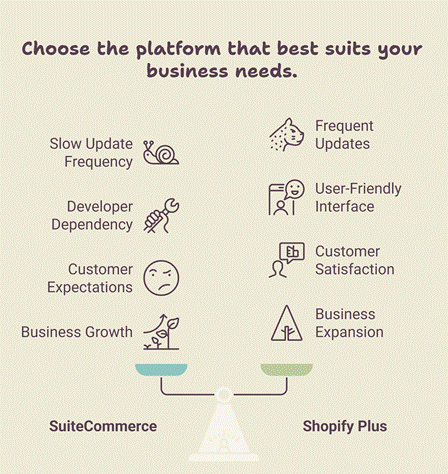
A platform migration isn’t just about changing where your store lives. It changes how your team works every day.
Here’s a simple comparison of what businesses often experience before and after moving from SuiteCommerce to Shopify Plus.
| With SuiteCommerce | With Shopify Plus |
| Routine store updates may require technical support | Many updates can be managed by business users |
| Limited app ecosystem | Access to thousands of apps and integrations |
| Marketing campaigns can take longer to launch | Faster campaign execution with greater flexibility |
| Customizations often require more development effort | Easier customization through themes and apps |
| Scaling can become more complex as the business grows | Designed to support fast-growing and enterprise businesses |
The biggest advantage isn’t replacing NetSuite. It’s giving your e-commerce team more flexibility while continuing to use NetSuite as the system that manages your business operations.
But getting these benefits depends on one thing: planning the migration properly.
A Successful Migration Starts Long Before Launch Day
SuiteCommerce to Shopify Plus migration or switching platforms is a process, not a single event. Breaking it into clear stages helps reduce risks and makes the transition much smoother.
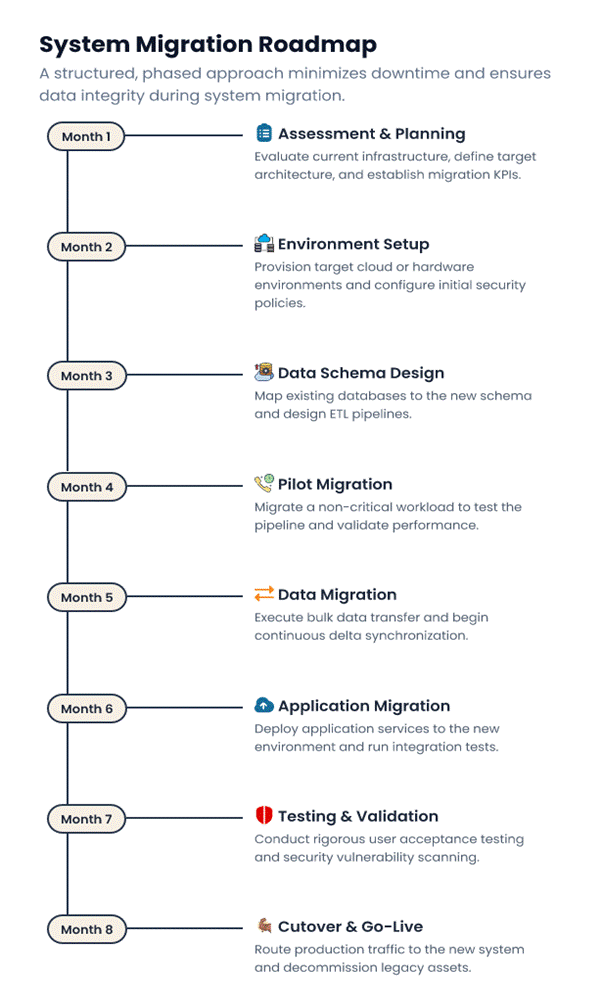
Each stage builds on the previous one. Rushing through the early planning phase often creates more work later, especially when data or integrations are involved.
Before You Decide to Migrate
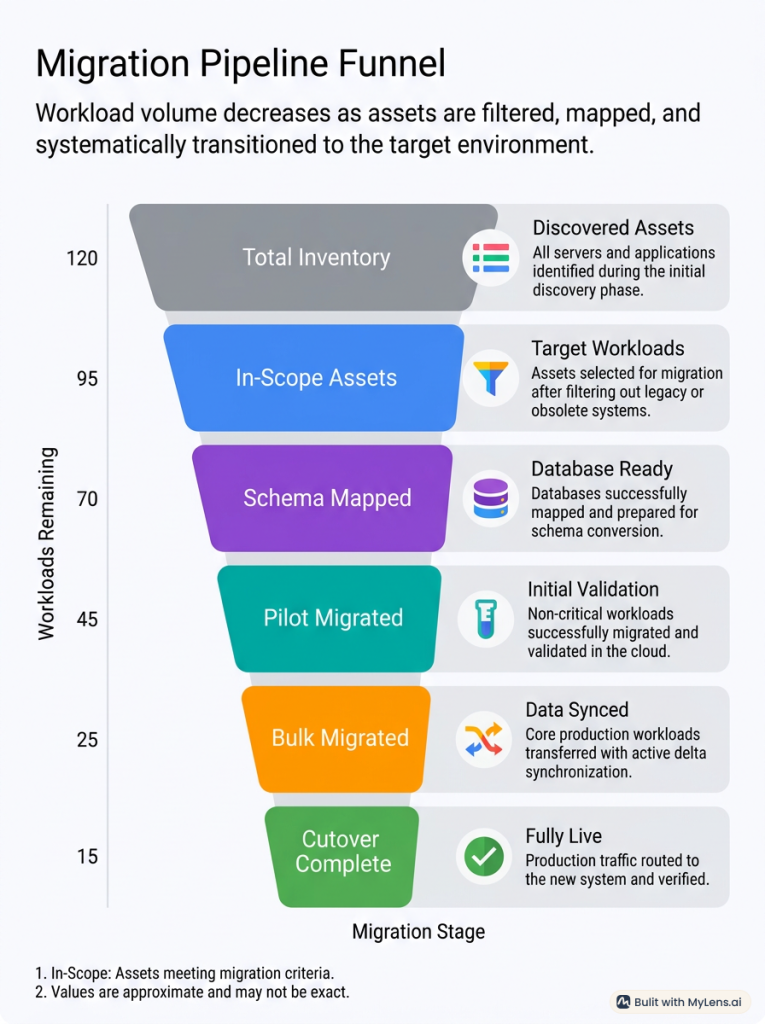
Here’s the Migration pipeline that breaks down into easy steps for you.
You don’t need to answer “yes” to every question, but if most of them sound familiar, it’s worth exploring your migration options.
- Our team spends too much time managing the online store.
- Store updates are slower than our business needs.
- Marketing campaigns depend heavily on developers.
- We need more flexibility as the business grows.
- Customers expect a better shopping experience.
- We want to keep NetSuite ERP while improving our e-commerce platform.
- We’re planning for future growth rather than solving today’s problems.
If you checked most of these boxes, you’re likely evaluating the right solution at the right time.
Common Mistakes That Can Slow Down Your Migration
- Migrating Old or Unnecessary Data
- Forgetting About SEO
- Testing Only at the End
- Leaving Business Teams Out of the Process
When Sticking With SuiteCommerce Might Be The Better Choice
Not every business needs to migrate right away.
If your current store performs well, supports your day-to-day operations, and isn’t slowing down your team, there’s no reason to rush the decision. The right time to migrate is when your business starts outgrowing the platform, not simply because another solution offers more features.
If you’re only planning minor improvements and your ecommerce goals haven’t changed much, continuing with SuiteCommerce while optimizing your existing setup may still be the better choice.
Why Folio3?
If several of the signs in this guide feel familiar, it may be the right time to start planning your SuiteCommerce to Shopify Plus migration. A successful SuiteCommerce to Shopify Plus migration requires more than transferring data.
It involves preserving your customer experience, reconnecting critical business systems, and ensuring your new store supports future growth. With the right strategy and an experienced migration partner like Folio3, you can make the transition while protecting your data, customer experience, and long-term growth.
Final Thoughts
Moving platforms isn’t about following trends. It’s about making sure your e-commerce store keeps up with the way your business operates.
One thing I’ve noticed is that businesses rarely regret migrating because they moved too early. More often, they wish they had acted before slow updates, growing complexity, and customer frustrations started affecting everyday operations.
Frequently Asked Questions
Will moving to Shopify Plus affect my NetSuite ERP?
No. Shopify Plus and NetSuite can work together through integrations, allowing you to keep NetSuite as your ERP while Shopify Plus manages your online storefront.
Can I migrate only part of my SuiteCommerce store?
Yes. Many businesses migrate products, customers, and orders first, then move additional content or custom features in phases based on their business priorities.
What should I clean up before migrating to Shopify Plus?
Review outdated products, duplicate customer records, unused content, broken links, and old integrations. Cleaning your data before migration makes the new store easier to manage.
Can Shopify Plus handle B2B and B2C businesses?
Yes. Shopify Plus supports both business models and offers features for wholesale pricing, company accounts, custom catalogs, and business-specific checkout experiences.
Do I need to redesign my store during the migration?
Not necessarily. Some businesses recreate their existing design, while others use the migration as an opportunity to improve navigation, branding, and the overall customer experience.
How can I reduce downtime during a SuiteCommerce to Shopify Plus migration?
Plan the migration in stages, test everything in a staging environment, and schedule the final launch during lower-traffic periods. This helps minimize disruptions for both customers and your team.
Should I migrate my store myself or work with a migration partner?
If your store has custom integrations, large product catalogs, or complex business processes, working with an experienced migration partner can reduce risks and help ensure a smoother transition.