Key Takeaways
- Celigo vs NetSuite connector is really a comparison between a general-purpose iPaaS platform and a native, pre-built SuiteApp built specifically for one integration.
- A Celigo integration vs NetSuite connector comparison usually comes down to flexibility versus deployment speed, not which option is objectively better.
- Celigo vs native NetSuite integration matters most once a business needs to connect several systems, not just one, since Celigo is built to scale across many endpoints.
- Cost and maintenance responsibility differ meaningfully between the two, and that difference tends to matter more over time than at initial setup.
Native, Pre-Built SuiteApp Connectors
A native NetSuite connector is typically a SuiteApp, a bundle installed directly inside a NetSuite account, built to handle one specific integration, such as a payment gateway or ecommerce platform, without requiring a separate external platform.
Because it lives entirely inside NetSuite, a native connector’s scope is fixed from the start. It was built to solve one connection well, not to serve as a general-purpose integration layer for whatever gets added next.
Where Celigo Works Differently
Celigo is a general-purpose integration platform as a service, better known by its product name, integrator.io, that connects NetSuite to dozens of other systems through a shared platform rather than a single-purpose bundle. Celigo’s own documentation on installing the integrator.io SuiteApp confirms that even Celigo’s NetSuite connection runs through a SuiteApp installed in the account. Still, that component exists to support Celigo’s broader platform rather than to be the integration itself.
Celigo NetSuite Connector Comparison: Architecture and Setup
How Celigo Is Built
Celigo’s integrator.io platform sits outside NetSuite and orchestrates data flows across every connected system from one central console:
- One platform manages multiple integrations across many applications
- Flows are configured through a shared interface rather than system by system
- Adding a new connected application generally means configuring a new flow, not standing up a new tool
How a Native Connector Is Built
A native connector is scoped narrowly and lives inside NetSuite itself:
- Installed as a bundle tied to one specific integration
- Configuration is limited to that one connection’s settings
- No separate platform login or subscription outside of NetSuite itself
Celigo Integration vs NetSuite Connector: Cost and Maintenance
Licensing Models Differ
Celigo is priced as an ongoing platform subscription, generally scaled to usage or connection count, since the business is paying for the platform itself, not just one integration. A native connector is typically priced per connection or as a one-time implementation cost, since its scope never extends beyond that single use case.
That distinction compounds as more integrations get added. Adding a sixth connection to an existing Celigo platform is usually an incremental cost. Adding a sixth native connector means licensing, deploying, and maintaining six separate bundles independently.
Who Owns Maintenance Over Time
Celigo’s flows need to be maintained inside its platform, which often becomes the responsibility of whichever team manages the broader integration stack.
A native connector’s maintenance is narrower by design, generally limited to keeping one connection current as NetSuite or the connected system updates its APIs.
Celigo vs Native NetSuite Integration: Where Each One Wins
When Celigo Is the Better Fit
Celigo tends to be the stronger choice once a business is connecting NetSuite to several systems at once – CRM, ecommerce, EDI, and a payment gateway, for example – since consolidating those integrations onto one platform is generally more maintainable than running several disconnected native connectors side by side.
Businesses in this position also benefit from having one place to monitor errors and flow health across every connection, rather than checking several separate bundles individually.
When a Native Connector Is the Better Fit
A native connector generally wins when a business has exactly one integration need and no near-term plan to add more. Services built around a single native connector like the NetSuite Integration Services are typically faster to deploy and cheaper to maintain than standing up a full iPaaS platform to handle one connection.
Oracle’s documentation on SuiteBundler describes how native SuiteApps are packaged and distributed as bundles specifically for this kind of scoped, single-purpose deployment, which is the architectural reason native connectors stay simpler to maintain than a full platform.
Making the Decision
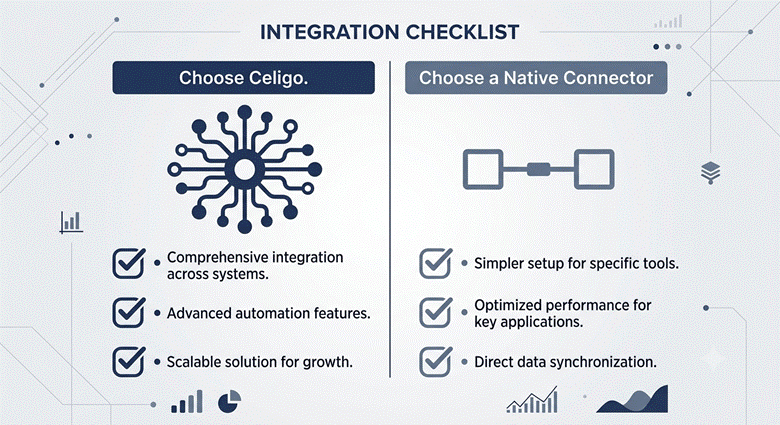
Neither option is universally better in a Celigo vs NetSuite connector comparison. The right choice depends on how many systems actually need to connect to NetSuite, both today and over the next year or two:
- One integration need today, no near-term plans to add more: native connector
- Multiple current or planned integrations across several systems: Celigo
- A team already maintaining other Celigo integrations: Celigo, for consistency
- A tight budget and a single, well-defined integration scope: native connector
For businesses still narrowing this decision, a broader NetSuite integration partners buyer’s guide can help evaluate which partners support which approach well, since not every implementation team is equally strong at both.
Why Folio3?
Folio3 has implemented both Celigo-based integrations and native, purpose-built NetSuite connectors, which means the recommendation isn’t tied to selling one platform over the other.
Talk to our NetSuite integration team to get a clear picture of where your current setup stands. That gives businesses an honest read on which approach actually fits their integration roadmap, not just their immediate need.
Final Thoughts
Celigo vs NetSuite connector is not a question of which product is better built. It is a question of how many systems actually need to talk to NetSuite, and whether that number is likely to grow. Get that scoping question right, and the rest of the comparison – cost, maintenance, and setup speed – tends to resolve itself.
Frequently Asked Questions
1. Is Celigo better than a native NetSuite connector?
Neither is universally better. Celigo suits businesses connecting NetSuite to multiple systems, while a native connector suits a single, well-defined integration need.
2. Does Celigo integration vs NetSuite connector affect ongoing cost?
Yes. Celigo is priced as an ongoing platform subscription, while native connectors are typically priced per connection or as a one-time implementation.
3. Can a business switch from a native connector to Celigo later?
Yes, though it usually means re-implementing that connection inside Celigo’s platform rather than migrating configuration directly, since the two are architecturally different.
4. Does Celigo vs native NetSuite integration matter for a single ecommerce connection?
Less so. A single, well-scoped integration is often simpler and cheaper to maintain as a native connector than as a full platform deployment.
5. Who maintains a Celigo integration after go-live?
Typically, whichever internal team manages the broader integration stack, since Celigo flows are configured and monitored inside its own platform rather than inside NetSuite alone.