Key Takeaways
- OIC is Oracle’s integration platform for connecting Oracle applications, NetSuite, and third-party systems through one integration environment.
- MuleSoft is an API-led integration platform built around APIs, connectors, reusable integration services, and data transformation.
- Both platforms support NetSuite connectivity, data mapping, workflow orchestration, monitoring, and integration management.
- OIC fits particularly well when NetSuite works alongside Oracle HCM, Oracle CX, Oracle Analytics, Oracle ERP Cloud, or other Oracle applications.
- MuleSoft fits well when NetSuite needs to exchange data across Salesforce, ecommerce, WMS, 3PL, databases, internal applications, and multiple APIs.
- The main decision comes down to your application landscape, API strategy, transformation requirements, and preferred integration platform.
It’s established by now that NetSuite rarely operates as a standalone business system. Companies connect it with CRM platforms, ecommerce stores, WMS platforms, 3PL providers, databases, HR applications, analytics tools, and other business systems to keep data moving between applications.
Two established integration platforms for these environments are Oracle Integration Cloud (OIC) and MuleSoft Anypoint Platform. Both support NetSuite integrations, but they take different approaches to connectivity, APIs, data transformation, orchestration, and integration management.
The right choice depends less on the number of integrations and more on which systems you need to connect, how they exchange data, and how your organization wants to manage APIs and integration workflows.
What Is OIC for NetSuite Integration?
Oracle Integration Cloud (OIC) is Oracle’s cloud integration platform for connecting NetSuite with Oracle applications, third-party applications, APIs, and other systems.
OIC provides connectors, integration workflows, data mapping, orchestration, monitoring, and API capabilities within a single platform. For NetSuite, Oracle Integration Cloud provides a NetSuite Adapter as well as a NetSuite REST Adapter for connecting NetSuite with other applications and services.
This gives organizations a way to build workflows that span NetSuite and other business systems without creating a separate integration environment for every application.
For example, an order process could involve an ecommerce platform, NetSuite, a warehouse system, and a customer notification service. OIC provides the environment for moving data between those systems, applying business rules, transforming information, and monitoring the resulting integration.
What Is MuleSoft for NetSuite Integration?
MuleSoft Anypoint Platform is an integration and API management platform that connects applications, data sources, APIs, and services across different technologies.
MuleSoft uses connectors to connect applications and systems, while its API-led approach supports the creation, management, security, and reuse of APIs. DataWeave provides data transformation capabilities for handling different data structures and formats.
For a NetSuite environment, MuleSoft could connect NetSuite with Salesforce, Shopify, a WMS, multiple 3PL providers, databases, internal applications, and custom APIs.
The platform is particularly relevant when integrations need reusable APIs, centralized API management, and complex data transformation across multiple systems.
OIC vs MuleSoft for NetSuite: At a Glance
| Factor | OIC | MuleSoft |
|---|---|---|
| Platform approach | Oracle’s integration platform for Oracle applications, NetSuite, APIs, and third-party systems | API-led integration platform for applications, APIs, data, and reusable integration services |
| NetSuite connectivity | Provides NetSuite-specific connectivity through Oracle Integration adapters | Uses NetSuite connectivity within the MuleSoft Anypoint Platform |
| Oracle applications | Strong native connectivity with Oracle applications such as Oracle HCM, CX, Analytics, and ERP Cloud | Connects with Oracle applications through connectors, APIs, and integration services |
| Best fit | NetSuite environments that need to exchange data with multiple Oracle applications and third-party systems through Oracle Integration | NetSuite environments connecting Salesforce, ecommerce, WMS, 3PL, databases, internal applications, and multiple APIs |
| API management | Supports API creation, management, and integration within OIC | API management is a central part of the Anypoint Platform |
| Data transformation | Visual mapping and transformation within integration workflows | DataWeave provides extensive transformation capabilities |
| Workflow orchestration | Visual orchestration for multi-step application workflows | API-led workflows and reusable integration services |
| Monitoring | Integration monitoring within Oracle Integration | Monitoring across APIs, applications, integrations, and services through Anypoint Platform |
| Oracle Cloud alignment | Natural choice for organizations already managing multiple Oracle applications and cloud services | Designed for organizations working across multiple vendors and technologies |
| Integration model | Application and workflow-oriented integration | API-led integration and reusable services |
What Is the Main Difference Between OIC and MuleSoft for NetSuite?
The main difference between OIC and MuleSoft is how they approach integration. OIC is Oracle’s integration platform, built to connect Oracle applications and third-party systems through a common integration environment.
On the other hand, MuleSoft is an integration and API management platform built around APIs, connectors, reusable integration services, and data transformation across different applications and technologies.
For NetSuite, this distinction is significant because the systems surrounding your ERP determine what the integration platform needs to handle.
Suppose your company uses NetSuite with Oracle HCM, Oracle CX, Oracle Analytics, and other Oracle applications. OIC provides dedicated Oracle application connectivity alongside NetSuite integration, giving your team a common environment for designing and managing those workflows.
Now consider a company using NetSuite with Salesforce, Shopify, a WMS, multiple 3PLs, PostgreSQL databases, and internal applications. The integration environment involves different vendors, APIs, data formats, authentication methods, and business rules. MuleSoft is designed for this type of environment, with API management and DataWeave providing greater control over reusable APIs and complex data transformation.
In simple terms, OIC is centered on application integration with Oracle applications and connected third-party systems, while MuleSoft is centered on API-led integration across different technologies and applications.
That is the key distinction to consider when choosing between the two for a NetSuite integration.
How Does OIC Connect With NetSuite?
OIC connects with NetSuite through dedicated NetSuite connectivity and uses that connection inside broader integration workflows involving other applications and APIs.
An OIC workflow starts by connecting NetSuite to the required applications, defining how information moves between them, mapping fields, and establishing the sequence of actions.
For example, an ecommerce order could trigger an OIC integration that validates customer information, transforms order data, creates the transaction in NetSuite, sends fulfillment information to a WMS, and returns status information to the ecommerce platform.
OIC provides a visual environment for designing these integrations, making it possible to define mappings, routing logic, transformations, and error handling without building every connection as custom code.
How Does MuleSoft Connect With NetSuite?
MuleSoft connects NetSuite to applications and services through its connector and API-based integration model.
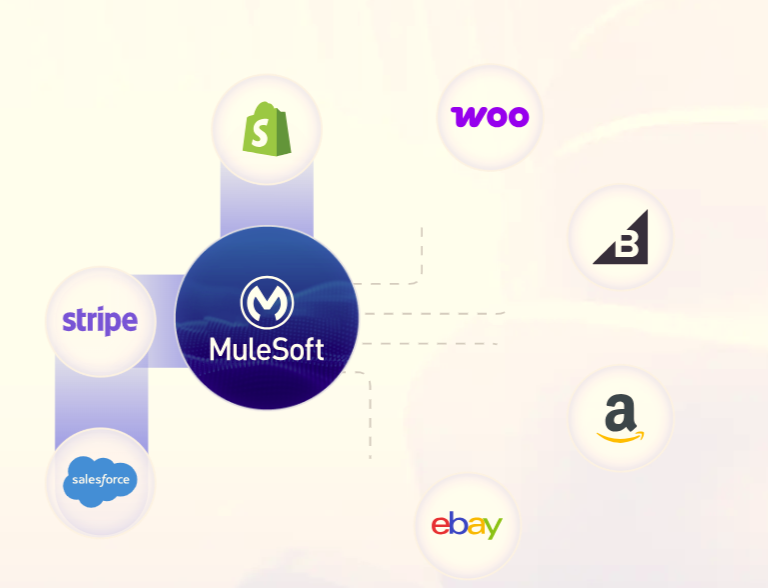
A NetSuite integration could sit alongside connectors for Salesforce, ecommerce platforms, databases, WMS applications, and other enterprise systems. MuleSoft then uses APIs and integration services to control how those systems exchange information.
For example, customer data could originate in Salesforce, order data could come from Shopify, inventory information could come from a WMS, and financial transactions could be recorded in NetSuite.
MuleSoft provides the tools to transform those different data structures and expose reusable APIs where required.
OIC vs MuleSoft for Data Mapping and Transformation
OIC provides visual data mapping and transformation within integration workflows, while MuleSoft uses DataWeave for more extensive programmatic data transformation.
OIC is well suited to integrations where teams want to visually map fields between applications and define transformations as part of an integration flow.
For example, a customer record from Salesforce might use different field names and structures from the corresponding NetSuite customer record. OIC provides mapping tools for converting that information before sending it to NetSuite.
MuleSoft takes a more code-oriented approach through DataWeave. This provides detailed control over complex transformations involving nested structures, conditional logic, arrays, and different data formats.
For straightforward application mappings, OIC provides a visual approach that is easy to manage. For integration environments requiring extensive transformation logic across many APIs and systems, MuleSoft provides greater flexibility through DataWeave.
Which Is Better for API Management?
MuleSoft has a stronger focus on API management, while OIC provides API capabilities as part of its wider integration platform.
MuleSoft Anypoint Platform is designed around the API lifecycle. Organizations can design, publish, secure, manage, monitor, and reuse APIs across their application landscape.
This matters when APIs form a central part of the integration strategy. For example, a company could expose customer, product, inventory, or order services through reusable APIs instead of creating separate point-to-point connections for every application.
OIC supports API creation and management as part of Oracle Integration, making it suitable when APIs are one component of a wider application integration environment.
If API management and API reuse are central requirements, MuleSoft deserves closer consideration.
OIC vs MuleSoft for Workflow Orchestration
OIC provides visual orchestration for multi-step business workflows, while MuleSoft handles orchestration through flows, APIs, connectors, and reusable integration services.
Consider an order-to-fulfillment process. An integration might need to receive an order, validate customer information, check inventory, create a NetSuite transaction, send fulfillment details to a WMS, and return an order status.
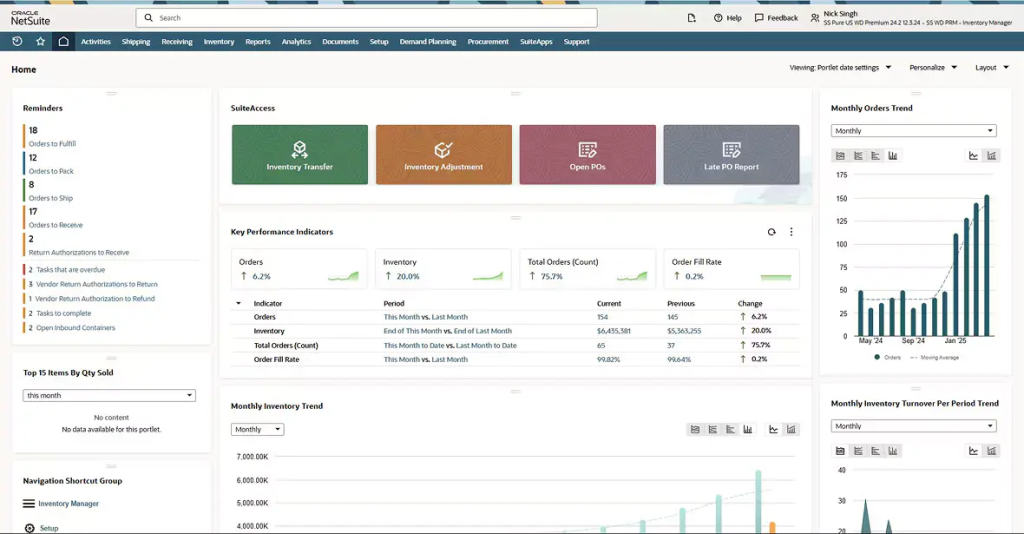
OIC provides a visual environment for defining these steps, including routing, transformation, error handling, and interactions between applications.
MuleSoft handles similar processes through flows and integration services. Its approach becomes particularly useful when those services need to be exposed through APIs and reused across multiple applications.
The difference comes down to how the organization wants to design and reuse integration workflows rather than whether either platform supports multi-step processes.
Which Is Better for Oracle Applications?
OIC provides the more direct integration approach when NetSuite needs to exchange data with several Oracle applications.
A company could run NetSuite alongside Oracle HCM, Oracle CX, Oracle Analytics, or Oracle ERP Cloud. OIC provides connectivity for these Oracle applications within the same integration platform.
For example, an employee-related process might involve Oracle HCM while financial information related to that process resides in NetSuite. OIC provides the integration environment for moving the required information between the two systems.
MuleSoft supports Oracle applications through its broader connector and API model. It remains a viable option when Oracle applications are part of a much larger collection of systems from different vendors.
Which Is Better for Salesforce, Ecommerce, WMS, and 3PL Integrations?
Both OIC and MuleSoft support integrations with Salesforce, ecommerce platforms, WMS applications, 3PL providers, and other third-party systems. The deciding factor is how those connections need to be managed.
A NetSuite ecommerce workflow might connect Shopify or Magento with NetSuite and a WMS. A larger environment could add Salesforce, a 3PL, a product information system, and internal applications.
OIC handles these integrations through adapters, mappings, orchestration, and monitoring within Oracle Integration.
MuleSoft approaches the same environment through connectors, APIs, reusable integration services, and DataWeave transformations.
If the environment needs application-to-application workflows, OIC provides a straightforward model. If the environment depends heavily on reusable APIs and services across many different systems, MuleSoft becomes more compelling.
OIC vs MuleSoft for Monitoring and Error Handling
Both platforms provide monitoring and error-handling capabilities, but they organize those capabilities differently.
OIC provides monitoring for integrations within the Oracle Integration environment. Your teams can review integration activity, investigate failed instances, and manage errors from the same platform used to design and deploy integrations.
MuleSoft provides monitoring across APIs, applications, integrations, and runtime services through Anypoint Platform.
For example, if a NetSuite order integration fails because a required field is missing, the integration team needs visibility into the failed transaction, the point of failure, and the data involved. Both platforms provide tools for investigating these issues.
The more important question is whether your team wants integration monitoring primarily around application workflows or across a wider API and service environment.
Which Is Easier to Implement: OIC or MuleSoft?
OIC is easier to approach when the integration environment already relies heavily on Oracle applications and the team wants visual integration design.
OIC provides a visual development experience with adapters, mappings, orchestration, and monitoring in one environment. Teams working primarily with Oracle applications and NetSuite may find this model familiar and straightforward.
MuleSoft provides extensive capabilities, but its API-led model introduces additional concepts around APIs, reusable services, DataWeave, policies, and API management.
That does not make MuleSoft inherently difficult. It means the platform requires a team that understands how the organization wants to design and govern APIs and reusable integration services.
Which Platform Scales Better for NetSuite Integration?
Both OIC and MuleSoft support large integration environments; the better choice depends on what needs to scale.
For OIC, scaling could involve adding more Oracle applications, NetSuite workflows, third-party applications, and integration processes within the Oracle Integration environment.
For MuleSoft, scaling frequently involves expanding the number of APIs, reusable services, applications, and integration flows managed through Anypoint Platform.
A company that expects its integration environment to grow around Oracle applications may find OIC easier to standardize. A company building a large API estate across many technologies may benefit from MuleSoft’s API-led model.
The number of integrations alone does not determine scalability. The design of those integrations matters just as much.
When to Choose Oracle Integration Cloud (OIC) for NetSuite Integration?
Choose OIC when NetSuite needs to exchange data with Oracle applications, third-party business systems, or both, and your organization wants those integrations managed through Oracle Integration.
1. You use several Oracle applications alongside NetSuite
If your environment includes NetSuite alongside Oracle HCM, Oracle CX, Oracle Analytics, Oracle ERP Cloud, or other Oracle applications, OIC provides native connectivity across those systems.
For example, an employee-related process might involve Oracle HCM while financial information related to that process resides in NetSuite. OIC provides the integration environment for moving the required information between the two systems.
2. You need NetSuite and third-party applications in the same workflows
OIC is not limited to Oracle-to-Oracle integrations. A NetSuite workflow might involve Salesforce, HubSpot, Magento, QuickBooks, eBay, or another external application.
An ecommerce order, for example, could originate in an online store, customer information could come from Salesforce, and the resulting transaction could be recorded in NetSuite. OIC provides the adapters, mapping, orchestration, and monitoring needed to manage that workflow in one environment.
3. You want visual integration design and orchestration
OIC provides a visual environment for building multi-step integrations. This is useful when a process involves several actions, conditional routing, data transformation, and error handling.
A NetSuite order workflow could validate the customer, transform the order data, create the transaction in NetSuite, update a fulfillment system, and return the resulting status to the ecommerce application.
4. You want centralized monitoring for your integrations
OIC provides monitoring within the same environment where integrations are designed and deployed. Teams have one place to review integration activity, investigate failures, and manage operational issues.
This becomes important when several NetSuite integrations are running at the same time. Salesforce-to-NetSuite, ecommerce-to-NetSuite, and Oracle HCM-to-NetSuite workflows can be managed through the same OIC environment.
5. You want Oracle-native platform alignment
OIC makes sense when your IT environment already follows Oracle’s identity, security, and cloud management model. The platform supports Oracle application connectivity alongside third-party integrations within the same Oracle integration environment.
This is useful when NetSuite is part of a larger Oracle application portfolio rather than the only Oracle product in use.
6. You need a managed integration platform
As the number of integrations increases, maintaining separate point-to-point connections becomes harder to manage. OIC provides one environment for designing, deploying, monitoring, and maintaining integration workflows.
For example, a company with NetSuite, Salesforce, Magento, a WMS, and Oracle HCM could manage those data flows through a common integration platform rather than treating every connection as a separate integration environment.
7. You need reliable integrations for business-critical processes
OIC is relevant for organizations where integration failures directly affect important business processes such as order processing, financial data synchronization, employee information, and inventory updates.
Its managed Oracle Cloud delivery model is designed for organizations that need predictable availability and operational management for their integration workloads.
When Is MuleSoft a Better Fit for NetSuite Integration?
MuleSoft is a better fit when NetSuite needs to exchange data across a large mix of applications, APIs, databases, and custom services, and the organization needs reusable APIs and centralized API management.
1. When You Need to Connect Multiple Business Systems
MuleSoft is a better fit when NetSuite needs to exchange data across a large mix of applications, APIs, databases, and custom services, and your organization needs reusable APIs and centralized API management.
Consider a company using NetSuite, Salesforce, Shopify, a WMS, several 3PL providers, PostgreSQL databases, and internal applications. The integration environment involves different vendors, APIs, data structures, authentication models, and business rules.
2. When You Need Reusable APIs and Data Transformation
MuleSoft provides an API-led approach to managing these connections. DataWeave supports data transformation across different formats and structures, while Anypoint Platform provides tools for API design, management, security, monitoring, and governance.
This approach allows your organization to build reusable integration services instead of developing separate, independent connections for every application.
Consider a company using NetSuite, Salesforce, Shopify, a WMS, several 3PL providers, PostgreSQL databases, and internal applications. The integration environment involves different vendors, APIs, data structures, authentication models, and business rules.
OIC vs MuleSoft for NetSuite: Final Verdict
OIC and MuleSoft both provide capable platforms for NetSuite integration, but they are designed around different integration models.
OIC provides a strong choice for organizations that want NetSuite, Oracle applications, and third-party systems managed through Oracle Integration. Its visual orchestration, application connectivity, mapping, and monitoring make it well suited to application-driven integration workflows.
MuleSoft takes an API-led approach. Its strength lies in connecting different technologies through APIs, reusable integration services, connectors, and DataWeave transformations.
If Oracle application connectivity is central to your NetSuite environment, OIC is the more natural choice. If your integration strategy revolves around APIs and reusable services across many different technologies, MuleSoft deserves serious consideration.
The best decision starts with the actual systems you need to connect, the data that needs to move between them, and how your team plans to manage those integrations over time.
Need Help Choosing Between OIC and MuleSoft?
Choosing an integration platform starts with understanding the systems involved, the data flows between them, API requirements, transformation complexity, and long-term integration management needs.
If you are comparing OIC and MuleSoft for a NetSuite project, share the applications you need to connect and the workflows you need to automate. An experienced NetSuite integration team can help you evaluate the integration model before you commit to a platform.
Planning a NetSuite integration? Explore Oracle Integration Cloud services to see how OIC can support NetSuite and multi-system integration requirements.
Frequently Asked Questions
Is OIC better than MuleSoft for NetSuite?
OIC is better suited to NetSuite environments that rely heavily on Oracle applications and want visual application integration through Oracle Integration. MuleSoft is better suited to environments where API management, reusable services, and connectivity across many technologies are central requirements.
Does OIC integrate with NetSuite?
Yes. OIC provides NetSuite-specific connectivity for integrating NetSuite with Oracle applications, third-party applications, APIs, and other systems.
Does MuleSoft integrate with NetSuite?
Yes. MuleSoft supports NetSuite integrations through its connector and API-led integration capabilities. NetSuite can exchange data with applications such as Salesforce, ecommerce platforms, databases, WMS platforms, and other connected systems.
Is OIC only for Oracle applications?
No. OIC supports integrations between Oracle applications and third-party applications. A NetSuite workflow, for example, could involve Salesforce, Magento, HubSpot, QuickBooks, or other external systems.
Which is easier to use, OIC or MuleSoft?
OIC provides a more visual approach to application integration, while MuleSoft provides a deeper API-led development model. The better option depends on the technical skills of the integration team and the way the organization plans to build and manage integrations.
Which is better for complex data transformation?
MuleSoft provides extensive data transformation capabilities through DataWeave. OIC provides visual mapping and transformation tools within its integration workflows.
Which is better for API management?
MuleSoft has a stronger emphasis on API management because API design, governance, security, and lifecycle management are central parts of Anypoint Platform. OIC provides API capabilities within its wider integration platform.
Should I choose OIC if I use NetSuite and Oracle HCM?
OIC is a strong option when NetSuite and Oracle HCM need to exchange information, and your organization wants those integrations managed through Oracle Integration. The same consideration applies when NetSuite works alongside Oracle CX, Oracle Analytics, or Oracle ERP Cloud.