Garment manufacturing is a complex and detail-driven industry, involving multiple production stages, seasonal collections, and diverse product variants. From fabric cutting and sewing to trimming and finishing, manufacturers must coordinate cut, make, and trim (CMT) operations across one or more factories while maintaining strict quality and cost controls.
Generic ERP systems often fall short in managing these complexities, as they are typically designed for standard business processes and lack specialized features for production tracking, variant management, and multi-factory visibility.
Modern garment ERP solutions address these challenges by integrating production planning, inventory management, and factory workflows into a unified platform. These systems enable manufacturers to track every stage of production, optimize resources, reduce waste, and maintain real-time visibility over costs, inventory, and delivery timelines.
Quick Comparison of Top Garment ERP Software in 2026
Choosing the right ERP for garment manufacturing can be complex due to differences in production models, scale, and integration needs. The table below compares seven leading garment ERP solutions across key aspects like deployment type, core features, and pricing structures. Use it to quickly identify which systems align with your business size, CMT complexity, factory workflows, and budget before diving deeper into the detailed breakdowns.
| ERP Software | Best For | Deployment | Key Features | Pricing |
|---|---|---|---|---|
| NetSuite + NStitch | Mid to large garment manufacturers | Cloud | End‑to‑end ERP with production tracking, inventory, and finance | Subscription |
| SAP S/4HANA for Fashion & Apparel | Large global manufacturers | Cloud / Hybrid | Advanced analytics, PLM, supply chain | Enterprise pricing |
| Microsoft Dynamics 365 | Mid to large apparel producers | Cloud | Flexible integrations, order & inventory management | Subscription |
| Infor CloudSuite Fashion | Manufacturers with complex supply chains | Cloud | PLM, production planning, inventory | Custom |
| Epicor Prophet 21 | Industrial workwear and high‑volume distributors | Cloud / On‑prem | Multi‑location inventory, EDI, warehouse tools | Custom |
| BlueCherry ERP | Mid to enterprise fashion manufacturers | Cloud / On‑prem | Manufacturing scheduling, inventory, and global operations | Custom |
| Odoo | Small to mid‑sized garment makers | Cloud / On‑prem | Modular ERP, inventory, and order tracking | Subscription |
What Is Garment ERP Software?
Garment ERP software is a specialized enterprise resource planning system designed to manage the complexities of garment manufacturing. Unlike generic ERP, which focuses on standard business processes, garment ERP addresses the unique needs of clothing production, including multi-stage workflows, seasonal collections, and factory coordination.
These systems help manufacturers plan, track, and optimize production from raw materials to finished garments, ensuring quality, cost control, and timely delivery. They are particularly useful for companies managing multiple factories, outsourced production, or large volumes of SKUs.
Key capabilities include:
- Production Planning: Schedule batches, allocate resources, and forecast demand efficiently.
- Cut, Make, Trim (CMT) Tracking: Monitor each stage of garment production, from fabric cutting to final finishing.
- Inventory and Material Management: Track raw materials, components, and finished goods across multiple locations.
- Readymade Garment Operations: Manage large-scale manufacturing, orders, and seasonal collections effectively.
Best Garment ERP Software in 2026
Below is a detailed breakdown of leading garment ERP software options, showing where they excel, who they’re best suited for, key capabilities, pricing approach, and real applications in clothing manufacturing environments
1. NetSuite + NStitch
Best For: Mid to large garment manufacturers, multi‑factory operations, and brands with complex cut, make, trim (CMT) workflows.
Business Model Fit:
- CMT Manufacturing: ⭐⭐⭐⭐⭐
- Multi‑Factory Operations: ⭐⭐⭐⭐⭐
- Wholesale / Distribution: ⭐⭐⭐⭐
- Direct‑to‑Consumer (DTC): ⭐⭐⭐⭐
Key Capabilities:
- Unified ERP covering finance, inventory, CRM, and order management
- Real‑time production tracking from fabric cutting through finishing
- End‑to‑end visibility into cost, labor, material usage, and work‑in‑progress
- Multi‑location inventory planning with demand forecasting
- Omnichannel retail support and sales channel synchronization
Pricing: Subscription‑based, scalable with modules and user counts
Garment Manufacturing Application:
NetSuite + NStitch provides the foundation for core business processes and enhances visibility specifically for garment production workflows. This combination allows manufacturers to monitor CMT operations, manage both in‑house and outsourced factories, and reduce bottlenecks in complex production environments.

2. SAP S/4HANA for Fashion & Apparel
Best For: Large, global garment manufacturers with high complexity and enterprise‑scale operations.
Business Model Fit:
- CMT Manufacturing: ⭐⭐⭐⭐⭐
- Multi‑Country Operations: ⭐⭐⭐⭐⭐
- Wholesale / Retail: ⭐⭐⭐⭐
Key Capabilities:
- Enterprise‑grade analytics and reporting
- Advanced supply chain and warehouse management
- Product lifecycle management (PLM) integration
- Multi‑entity, multi‑currency, and compliance support
- Forecasting and demand planning for seasonal collections
Garment Manufacturing Application:
SAP S/4HANA is strong in global manufacturing environments requiring deep analytics, compliance tracking, and tight integration with other enterprise systems. It works well for brands with multiple factories and geographically distributed supply chains.
Pricing: Enterprise pricing; typically custom and based on configuration.
3. Microsoft Dynamics 365
Best For: Mid to large garment makers needing flexibility and integration with existing business software.
Business Model Fit:
- Mid‑Scale Manufacturing: ⭐⭐⭐⭐
- Multi‑Channel Retail & Wholesale: ⭐⭐⭐⭐
- Finance Integration: ⭐⭐⭐⭐
Key Capabilities:
- Strong integration with the Microsoft ecosystem (Power BI, Office 365)
- Inventory and production order management
- Real‑time reporting and dashboards
- Modular, scalable architecture
- Ecommerce and POS integrations
Garment Manufacturing Application:
Dynamics 365 is ideal for businesses that want flexibility in deployment and significant integration with existing platforms such as CRM, reporting tools, and ecommerce systems.
Pricing: Subscription‑based, tiered by modules and users.
4. Infor CloudSuite Fashion
Best For: Manufacturers focused on production planning, multi‑location operations, and PLM integration.
Business Model Fit:
- Production Planning: ⭐⭐⭐⭐⭐
- Multi‑Location Inventory: ⭐⭐⭐⭐
- Seasonal Collections: ⭐⭐⭐⭐
Key Capabilities:
- Built‑in PLM and production scheduling
- Supply chain coordination and vendor tracking
- Multi‑warehouse inventory visibility
- Advanced reporting and analytics
- Cloud‑native deployment for scalability
Garment Manufacturing Application:
Infor CloudSuite is suited for brands that require deep support for manufacturing workflows, especially where PLM and production planning need to be tightly integrated with ERP.
Pricing: Custom, based on modules and footprint.
5. BlueCherry ERP
Best For: Mid to enterprise‑level garment manufacturers with complex production schedules.
Business Model Fit:
- CMT & Full‑Cycle Manufacturing: ⭐⭐⭐⭐
- Global Operations: ⭐⭐⭐⭐
- Wholesale / Retail: ⭐⭐⭐⭐
Key Capabilities:
- Production scheduling and work‑order management
- Multi‑location and global operations support
- Inventory and warehouse management
- Reporting and financial controls
Garment Manufacturing Application:
BlueCherry caters well to manufacturers who need robust shop‑floor planning, detailed scheduling, and integration with back‑office systems.
Pricing: Custom-based on deployment and scale.
6. ApparelMagic (smaller or regional solution)
Best For: Small to mid‑sized garment makers, boutique manufacturers, and designers with lighter production complexity.
Business Model Fit:
- Small‑Scale Manufacturing: ⭐⭐⭐⭐
- Wholesale / Retail: ⭐⭐⭐
- Basic Production Tracking: ⭐⭐
Key Capabilities:
- Inventory and size/color matrix tracking
- Order management and basic production workflows
- Customer and sales management tools
- Simple reporting and analytics
Garment Manufacturing Application:
ApparelMagic is suitable for small fashion or garment businesses with limited factory complexity or fewer SKUs, offering an affordable, fashion‑focused ERP without heavy manufacturing modules.
Pricing: Subscription‑based with tiered plans.

Garment Manufacturing ERP: Streamlining Production, CMT, and Factory Operations
Garment manufacturing involves multiple stages, from fabric cutting and sewing to trimming, finishing, and delivery. Managing these processes across one or more factories, tracking labor and material costs, and coordinating in-house and outsourced operations can quickly become complex. Generic ERP systems often struggle to handle this level of detail, especially when it comes to cut, make, trim (CMT) workflows, multi-factory visibility, and production planning.
Specialized garment ERP solutions, such as NetSuite combined with NStitch, provide a unified approach. NStitch enhances traditional ERP by offering real-time CMT tracking, production order monitoring, and detailed cost visibility for both in-house and outsourced factories. Together, they help manufacturers optimize workflow, reduce delays, and maintain consistent quality across all garment production stages.
Key capabilities include:
- Production Planning: Efficiently schedule batches and allocate resources across multiple factories.
- CMT Tracking: Monitor fabric, labor, and assembly at each stage of production.
- Inventory & Material Management: Keep real-time control of raw materials, components, and finished garments.
- Readymade Garment Operations: Manage seasonal collections, bulk orders, and multi-factory coordination seamlessly.
Why NetSuite + NStitch Is Popular for Garment Manufacturing
Garment manufacturers face complex production workflows that require precise coordination across multiple factories, stages, and product variants. NetSuite, when paired with NStitch, addresses these challenges by providing real-time visibility into cut, make, and trim (CMT) operations, enabling manufacturers to monitor progress, track costs, and manage work-in-progress efficiently.
Here is the (Cut Make Trim) CMT process flow diagram
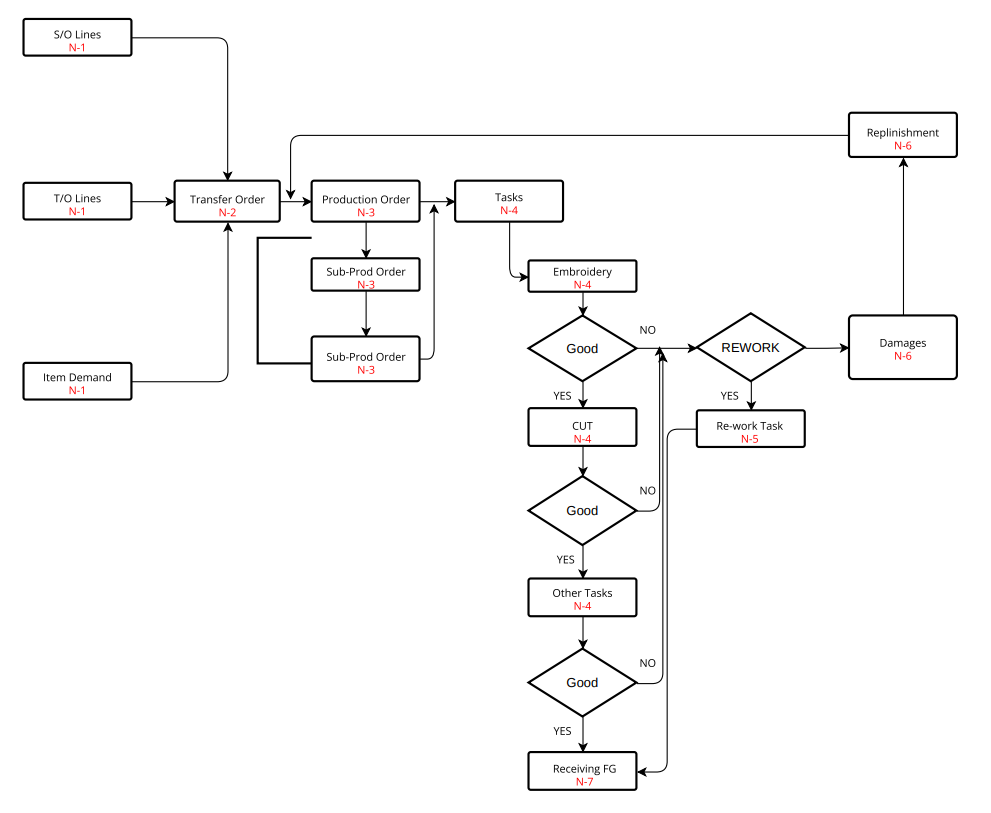
This combination also allows multi-factory visibility, so production managers can oversee both in-house facilities and outsourced vendors from a single platform. By integrating with inventory, finance, and ecommerce systems, manufacturers gain a unified view of operations, reducing delays, errors, and manual reporting.

Many businesses leverage these tools with implementation guidance from partners like Folio3, ensuring the system aligns with their specific garment production workflows and operational needs.
Key benefits include:
- Real-time tracking of production stages, labor, and material usage
- Coordinated multi-factory and outsourced operations
- Integrated financial, inventory, and order management
- Enhanced visibility into costs, timelines, and bottlenecks
FAQs
1. What is garment ERP software?
Garment ERP software is a specialized enterprise system built to manage the unique needs of clothing manufacturers. Unlike generic ERP, it focuses on production workflows, multi-factory operations, cut, make, trim (CMT) tracking, and inventory for seasonal collections. It helps businesses plan production, reduce delays, and optimize costs.
- Tracks raw materials, work-in-progress, and finished garments
- Manages bulk and seasonal orders efficiently
- Integrates inventory, production, and financial data
2. How is garment ERP different from generic ERP?
Generic ERP systems handle standard business processes such as finance, HR, and basic inventory. They often lack support for the specific complexities of garment manufacturing. Garment ERP, on the other hand, is designed to manage multi-stage production, size/color matrices, seasonal SKUs, and factory coordination.
- Monitors CMT operations (cut, make, trim) in real time
- Supports multiple product variants including sizes and colors
- Coordinates both in-house and outsourced factories
3. How much does garment ERP software cost?
The cost of garment ERP depends on the deployment model, company size, and specific features. Cloud ERP usually involves subscription fees based on users or modules, while on-premise solutions have higher upfront costs and additional customization fees. Add-ons like NStitch for production tracking may increase total investment, but they provide visibility and efficiency for complex manufacturing workflows.
- Cloud: Monthly or annual subscription per user/module
- On-premise: Upfront licensing + customization fees
- Add-ons like NStitch can enhance CMT tracking and reporting
Head to our NetSuite retail apparel pricing guide for detailed information.
4. What is the best ERP for garment manufacturing companies?
For most mid-to-large garment manufacturers, the best ERP is NetSuite paired with NStitch. This combination offers a unified platform for finance, inventory, order management, and real-time CMT tracking. It is particularly suited for multi-factory operations, seasonal collections, and complex production workflows.
- NetSuite + NStitch provides end-to-end visibility
- Supports both in-house and outsourced CMT operations
- Integrates inventory, finance, and omnichannel commerce
5. Is cloud ERP better for garment manufacturing?
Cloud ERP is often the preferred choice for garment manufacturers due to its flexibility, scalability, and accessibility. It allows multiple factories and outsourced vendors to access real-time data without relying on local servers. Cloud systems also simplify updates, integrations with ecommerce or accounting systems, and centralized reporting across production locations.
- Real-time access to production and inventory data
- Easier multi-location and vendor management
- Automatic updates and seamless integration with other systems
6. How does Folio3 help implement ERP like NetSuite + NStitch?
Folio3 provides expert implementation services for garment manufacturers looking to deploy NetSuite with NStitch. They ensure the system aligns with unique production workflows, multi-factory operations, and inventory management requirements. Their team also provides training and ongoing support to help manufacturers get the most value from the ERP system.
- Configures CMT workflows and production tracking
- Integrates inventory, finance, and order management
- Provides training, support, and workflow optimization