NetSuite Advanced Order Management (AOM) is a native NetSuite module that automates fulfillment location assignment and order processing across multiple warehouses, stores, and channels. It calculates the optimal fulfillment location for each sales order line based on configurable business rules, introduces Fulfillment Requests as a transaction layer between the Sales Order and Item Fulfillment, and supports Store Pickup Fulfillment for omnichannel operations.
AOM is available free of charge to all NetSuite subscribers and does not require a separate license for the first 5,000 automated sales orders per year. Beyond that threshold, additional automation capacity can be purchased through your NetSuite account representative.
Before AOM existed, distribution businesses had to manually monitor inventory across every warehouse and store location to prevent backorders. AOM eliminates that manual process entirely. When a sales order is created, the module evaluates your configured business rules, finds the best fulfillment location for each order line, and sets it automatically.
This guide covers the three AOM features, the step-by-step configuration process, and the most common setup mistakes to avoid.
What Is NetSuite Advanced Order Management (AOM)?
NetSuite AOM is an order allocation orchestration module that automates fulfillment location assignment based on real-time global inventory availability and configurable business rules.
It answers one question on every order: which location should fulfill this line, and when should the fulfillment be released?
AOM includes three core features:
1. Automatic Location Assignment (ALA) ALA calculates the optimal fulfillment location for each sales order line based on rules you define. You can optimize for proximity to the customer, inventory availability, shipping cost, delivery speed, or a combination of factors. The logic runs asynchronously in the background, meaning it does not block other processes on the sales order.
2. Fulfillment Request A Fulfillment Request is a new transaction that sits between the Sales Order and the Item Fulfillment. It decouples the traditional shipping workflow — instead of jumping straight from a sales order to a shipment, the Fulfillment Request acts as a release instruction to the warehouse or store. This is particularly useful in 3PL fulfillment and complex EDI flows where fulfillment execution happens outside NetSuite.
3. Store Pickup Fulfillment A separate fulfillment transaction that manages in-store customer pickups. It supports automated notifications to both staff and customers when an order is ready for pickup. Store Pickup Fulfillment is only relevant if you operate physical retail locations alongside your distribution operation.
Requirements
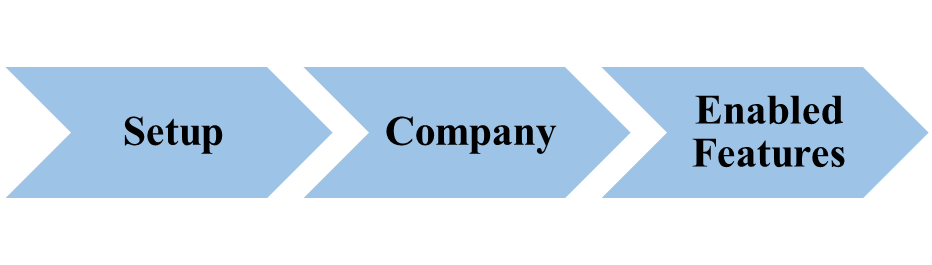
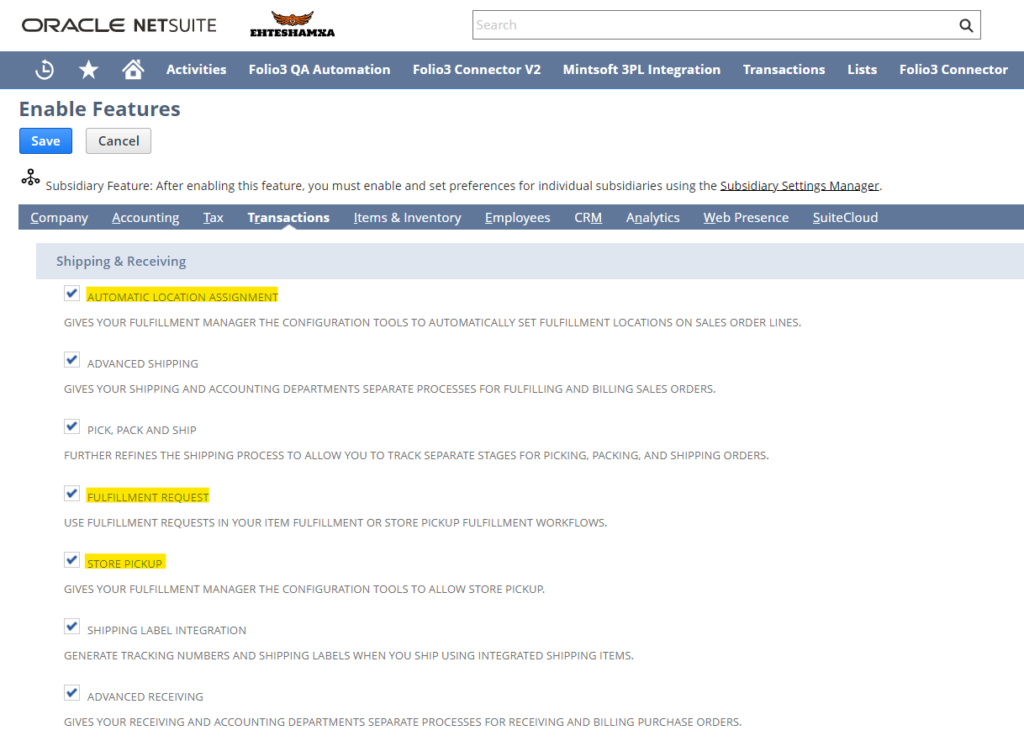
To make this available, we need to enable the following features by navigating to Setup > Company > Enabled Features > (Transactions tab) :
And then make the following features enable:
-
Automatic Location AssignmentFulfillment RequestStore Pickup
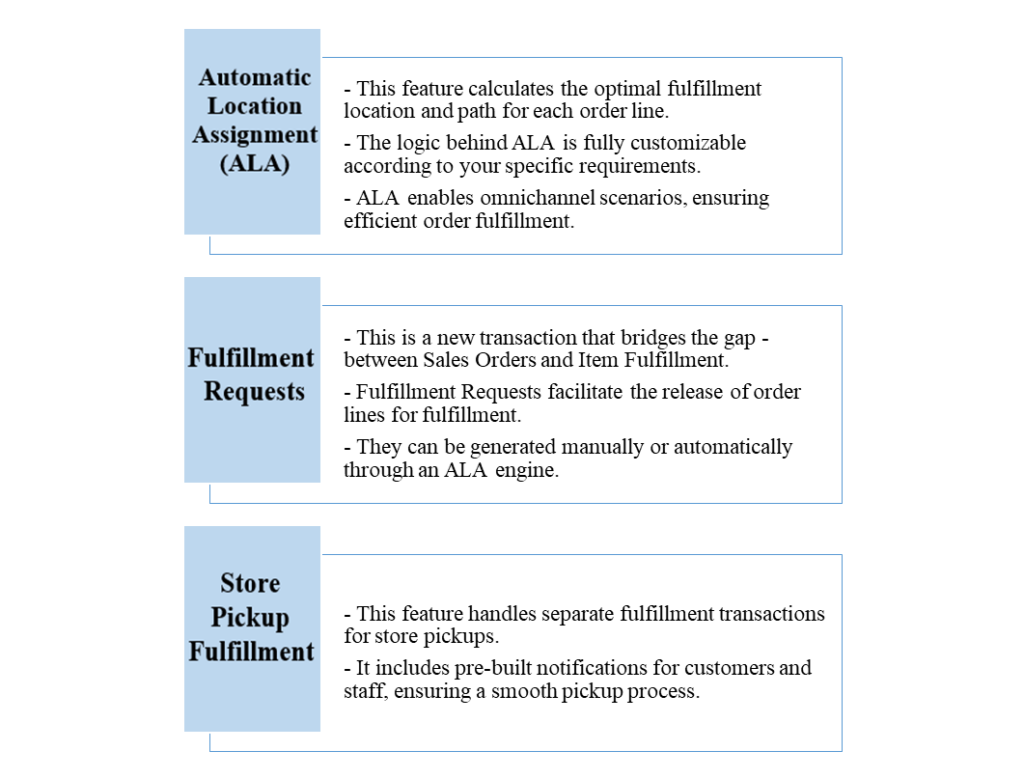
Advanced Order Management (AOM) offers three essential features that are crucial for distribution companies:
- Automatic Location Assignment (ALA)
- Fulfillment Requests
- Store Pickup Fulfillment
CONFIGURATION
To configure Automatic Location Assignment (ALA) in NetSuite, follow these main steps:
Adjust Locations:
Go to the Location page by using the global search or by the following navigation:
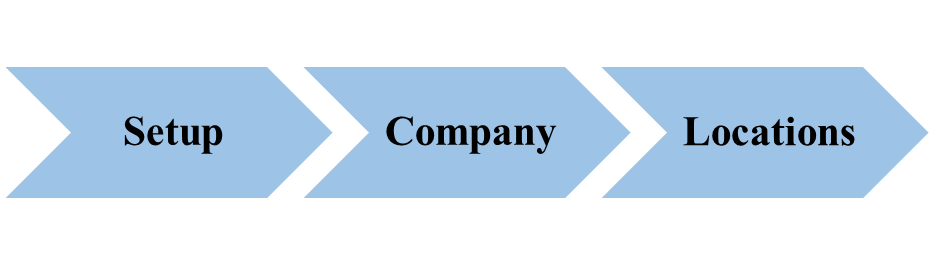
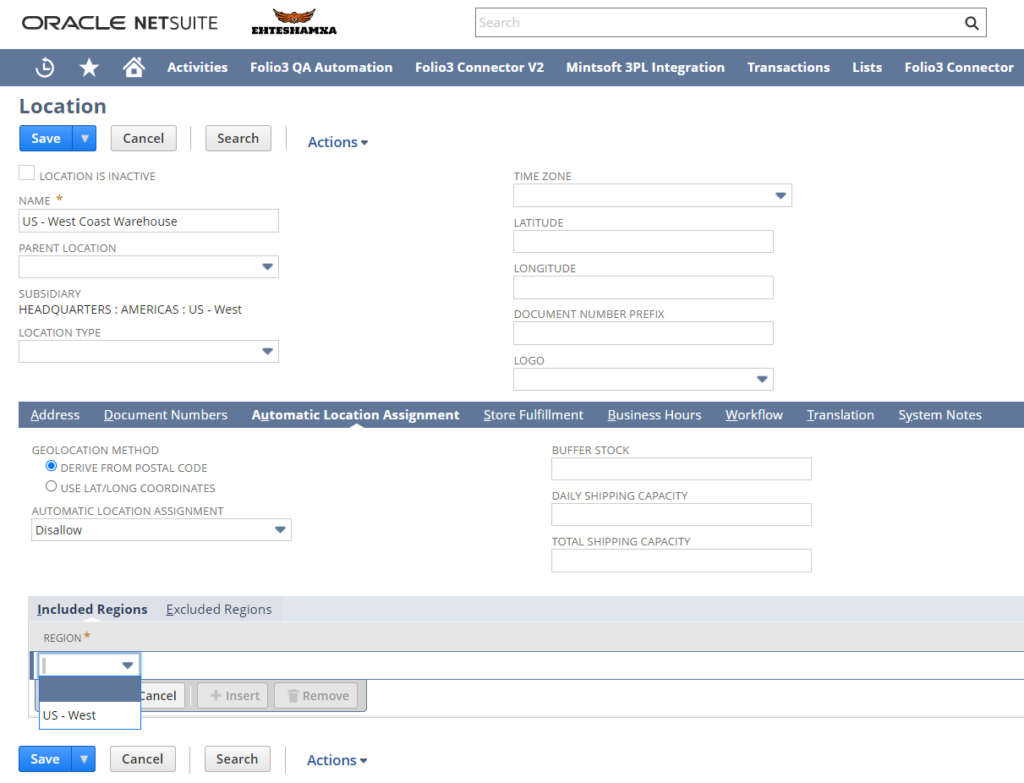
On the location record, on which you want to use ‘Automatic Location Assignment’ and ‘Store Fulfillment’.
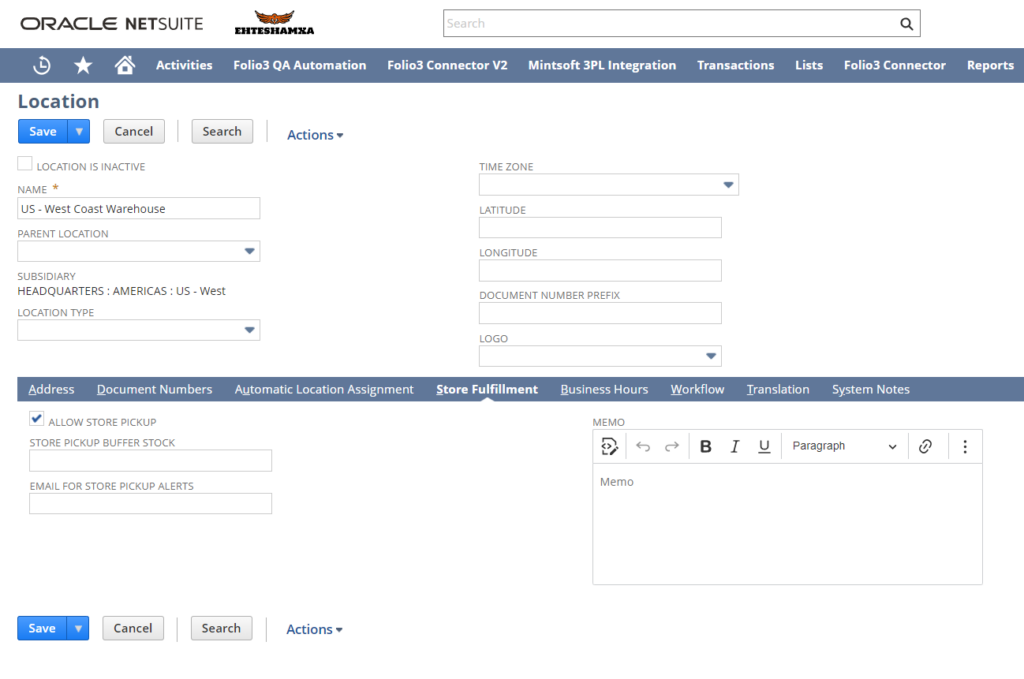
Ensure that the ‘Allow Store Pickup’ checkbox is checked on the ‘Store Fulfillment’ tab if the location represents a store where customers can pick up their orders:
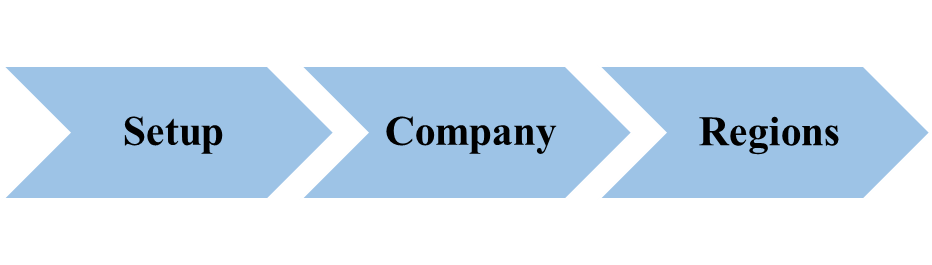
You can divide regions by U.S. states or choose a different approach for this navigate to:
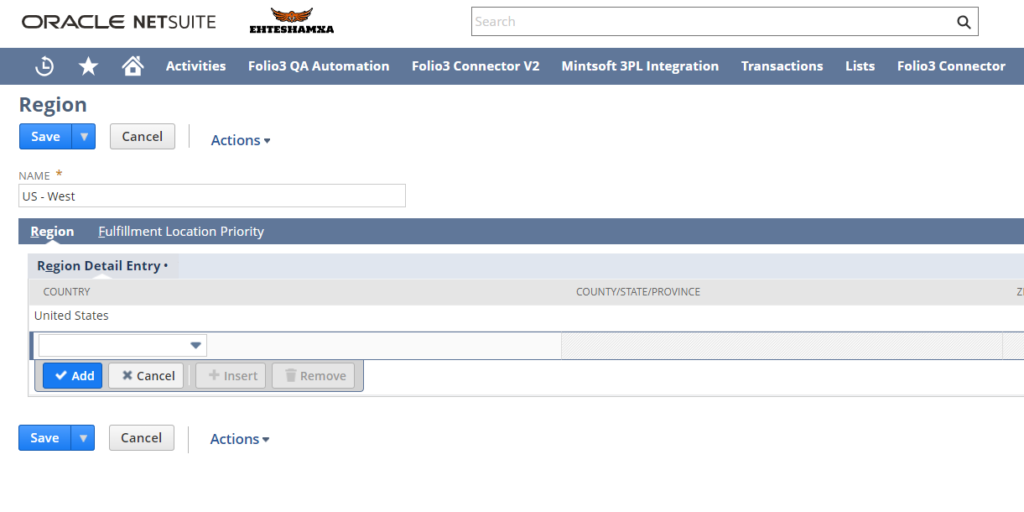
On the location record’s ‘Automatic Location Assignment’ tab, specify the regions you want to include in the auto location assignment.
Review the available options and their impact on fulfillment in the SuiteAnswers article. These location settings will be considered during the assignment process.
Create Configurations:
Create a new configuration by navigating the:
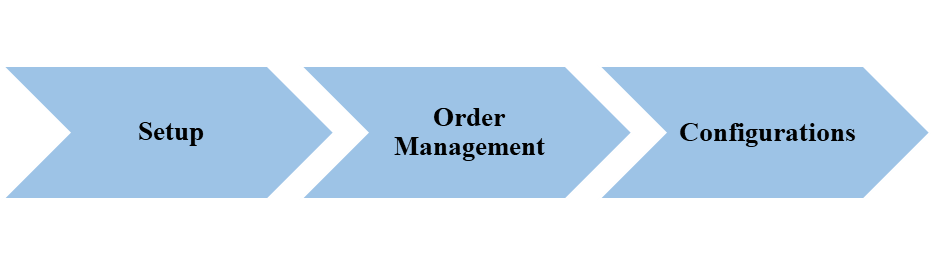
Enter a name for the configuration (Subsidiary selection is applicable for OneWorld environments).
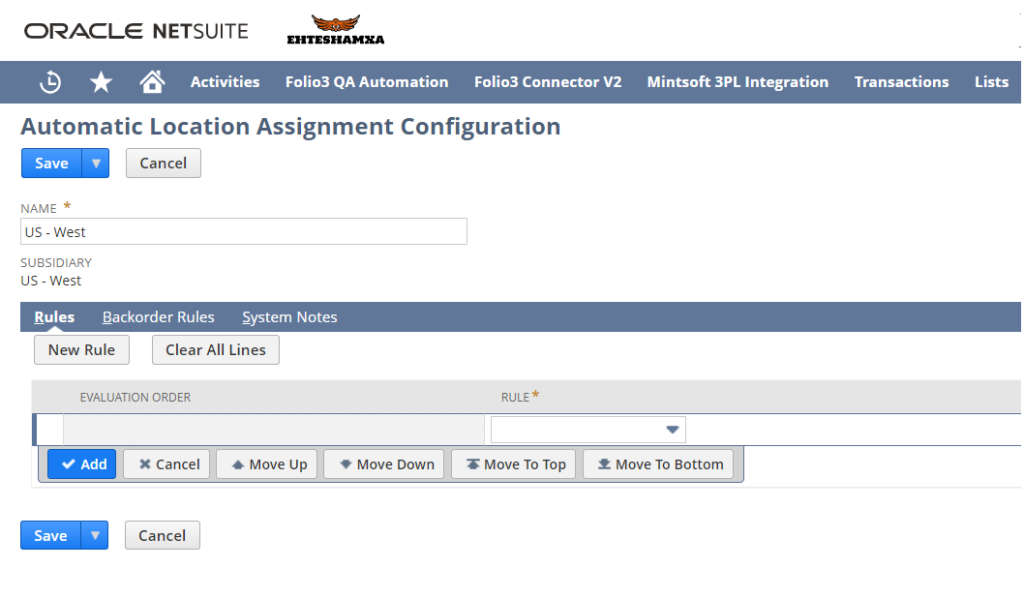
Save the configuration record and proceed to the next step.
Create Rules and Settings:
Edit the configuration saved record you have created in the previous step.
Click the “New Rule” button on the configuration record.
Choose between applying the rule to all items or applying it to items returned by a Saved Search.
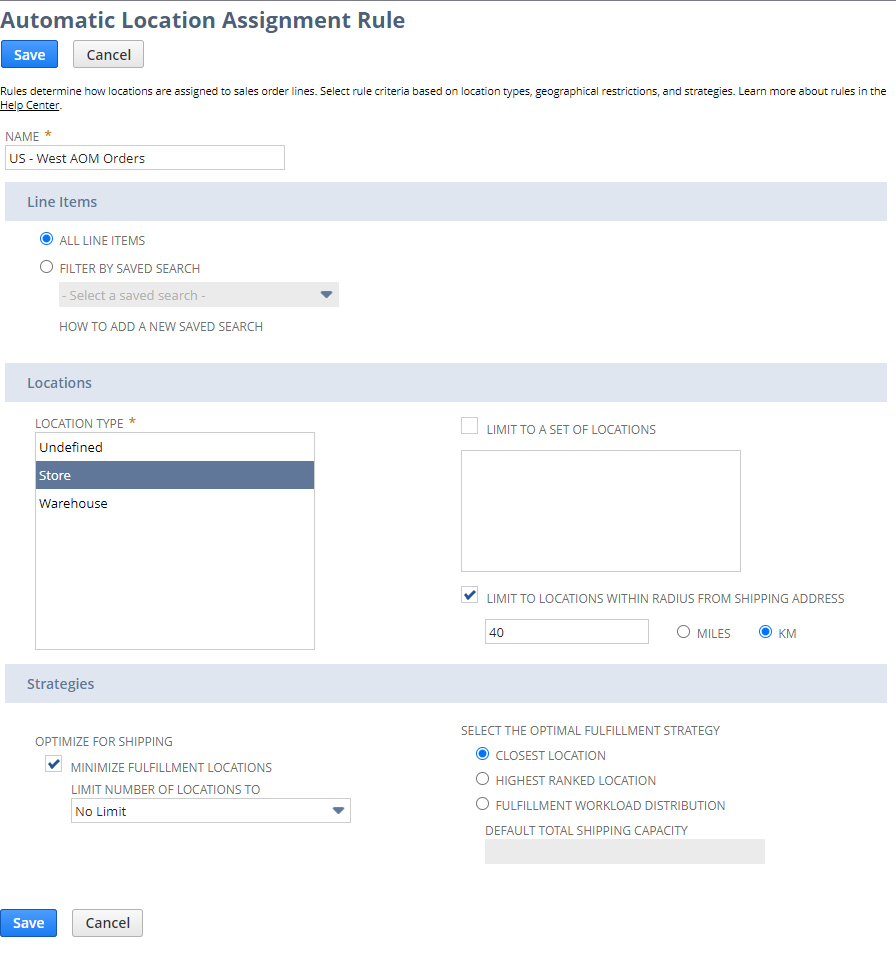
Configure the rule fields based on your requirements. Separate rules can be created for the back-ordered orders by navigating to the “Backorder Rules” tab. Refer to the SuiteAnswers documentation to understand the impact of each field on your system.
Run Automation:
Navigate to Advanced Order Management Setup by the the following path.
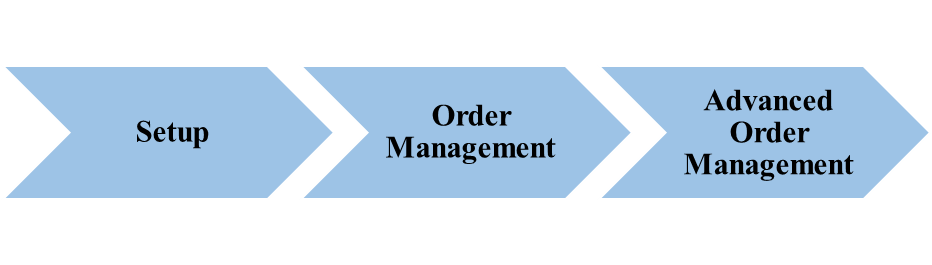
Review the settings and their impact on fulfillment and location assignments in the SuiteAnswers documentation (login required).
In OneWorld NetSuite environments, use the ‘Automatic Location Assignment’ tab to assign the default configuration per subsidiary.
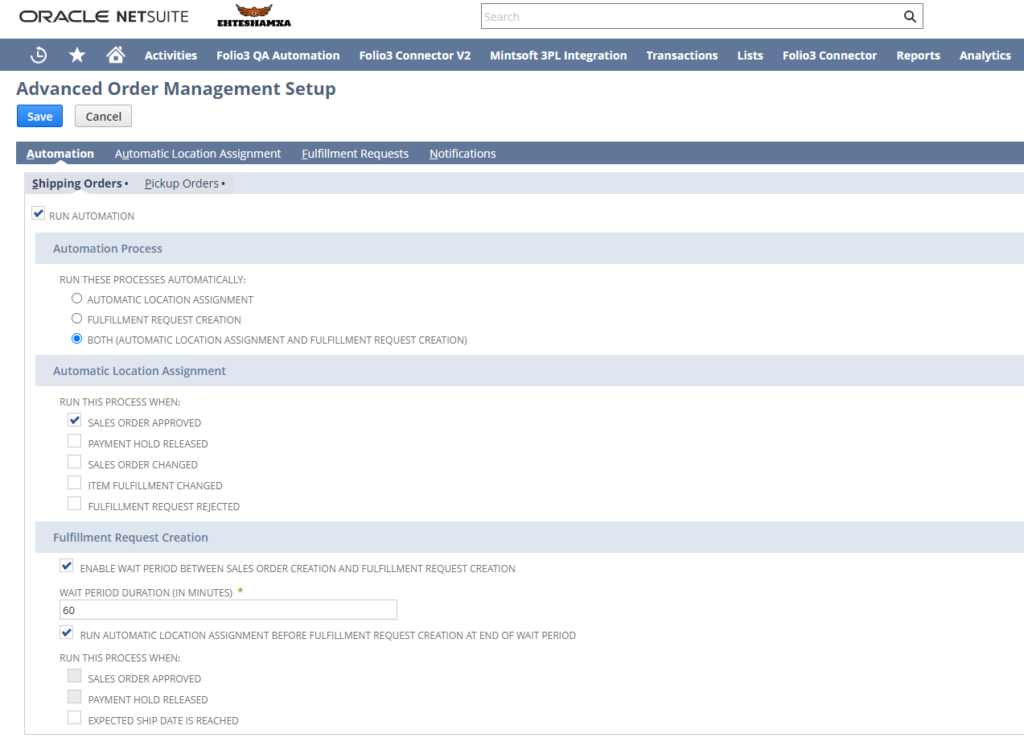
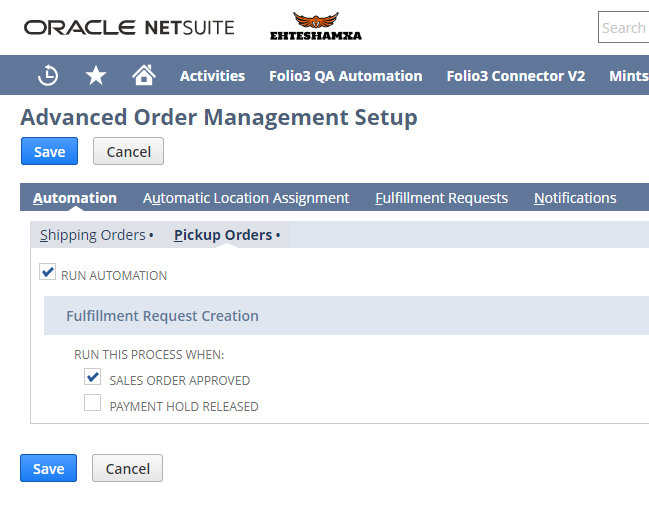
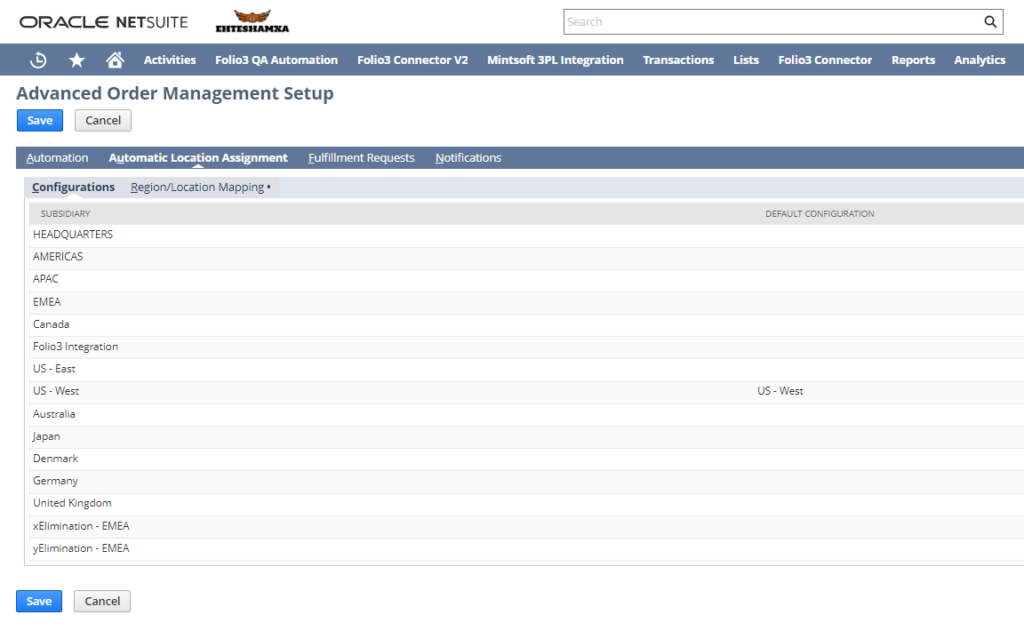
By following these steps and referring to SuiteAnswers for detailed explanations, you can successfully configure Advanced Order Management in NetSuite.
Please note that detailed configuration and setup instructions can be found in SuiteAnswers. Once logged in, you can access the relevant information.
When Advanced Order Management (AOM) is enabled in NetSuite, you can fulfill an order from a location other than the one set on the sales order. NetSuite’s Advanced Order Management features help you streamline your order fulfillment process, reduce costs, and improve customer satisfaction. This is because AOM provides you with more flexibility in managing your inventory and fulfilling orders.
How Does Automatic Location Assignment Actually Work?
Understanding the logic behind ALA prevents the most common configuration mistakes.
When a sales order is saved or approved (depending on your automation trigger settings), the ALA engine runs and evaluates each order line independently. For each line, it looks at:
- The customer’s shipping address and the regions you have mapped to each location
- The inventory available at each eligible location
- The business rules in your ALA configuration (proximity, cost, fulfillment workload distribution)
- Whether the location is set up to allow automatic assignment
The engine then assigns the best location to that line. If no eligible location can fulfill the line, it goes into an exception queue for manual review.
There are two ways ALA can run:
- Asynchronously — the engine runs in the background triggered by a business event (Sales Order Approved, Payment Hold Released). This is the standard and recommended setting.
- Synchronously — triggered via a macro or SuiteScript. Each process must wait for the previous one to complete, which can slow down workflows on high-volume accounts.
Key setting to check: In a OneWorld environment, you must assign a default ALA configuration per subsidiary. If no configuration is assigned to a subsidiary, ALA will not run on sales orders in that subsidiary, even if automation is turned on globally.
FAQs
What is NetSuite Advanced Order Management (AOM)?
NetSuite AOM is a native module that automates fulfillment location assignment across warehouses and stores. It includes three features: Automatic Location Assignment (ALA), Fulfillment Requests, and Store Pickup Fulfillment. AOM is included free of charge for up to 5,000 automated sales orders per year.
How do I enable AOM in NetSuite?
Go to Setup > Company > Enabled Features > Transactions tab. Enable: Automatic Location Assignment, Fulfillment Request, and Store Pickup. Then go to Setup > Order Management > Advanced Order Management to configure automation settings.
What is the difference between Automatic Location Assignment and a Fulfillment Request?
ALA determines which location should fulfill an order line. A Fulfillment Request is the transaction that formally releases that line to the assigned location for execution. They are separate features but work together — when both are enabled, ALA assignment and Fulfillment Request creation can be triggered by the same business event.
What happens when ALA cannot find a valid fulfillment location?
The order line goes into an exception queue. You can define custom Fulfillment Exception Reasons to track why lines are not being assigned. This allows your team to resolve exceptions systematically rather than hunting through individual orders.
Does AOM work in a NetSuite OneWorld environment?
Yes, but you must assign a default ALA configuration per subsidiary. If a subsidiary has no configuration assigned, ALA will not run for orders in that subsidiary regardless of global automation settings.
What is a Store Pickup Fulfillment in NetSuite?
It is a separate fulfillment transaction specifically for orders where the customer picks up from a physical store location. It includes automated notifications for staff and customers and requires the Allow Store Pickup checkbox to be enabled on the relevant location record.
Can I run AOM alongside a third-party 3PL integration?
Yes. Fulfillment Requests are particularly useful in 3PL and EDI contexts because they decouple the release instruction from the Item Fulfillment transaction. Your 3PL system can receive the Fulfillment Request signal and execute fulfillment externally.