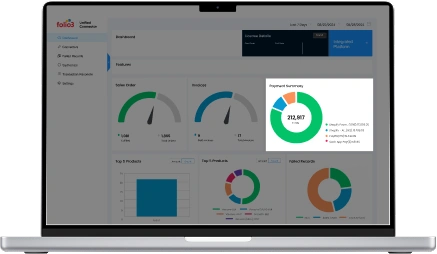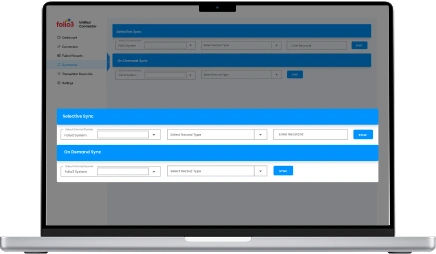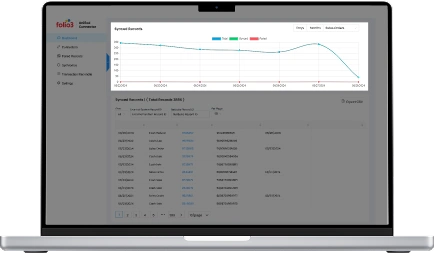












































Gmail handles all the communication. If you integrate it with NetSuite, you get synced emails, contacts, and calendar events between the two systems. It will help you automate email replies and maintain consistent contact information across all platforms.
The two-way synchronization of emails and calendar events between Outlook and NetSuite enables automated logging of customer communications. It also adds meeting schedules directly into your CRM records so you can keep track of your meetings and collaborate better.


Communication can make or break your business. If a business’s CRM isn’t connected to its email system, important client emails might not get logged, which can cause confusion. To mitigate these challenges, businesses can partner with ERP integration providers like Folio3, which offer pre-built and custom integrations.
Below is a detailed breakdown of some of these challenges:
If your business is not using an integrated ERP with its mailing apps and other systems, employees have to check each platform manually for any important emails. This slows down workflows and increases the probability of missed client/vendor messages and delayed responses.
Without email integration, you have to send and track documents like invoices and POs manually. Your accounts team creates an invoice in the ERP but has to manually attach it to an email from Outlook. If they forget or mistype the recipient’s email, the invoice never gets delivered. This leads to payment delays and unnecessary chasing.
ERP users cannot easily view email threads related to payments, shipments, or order changes, which can lead to confusion and miscommunication. Mailing system integration with NetSuite syncs email to CRM systems. It helps your team keep track of customer/vendor/supplier emails and meetings so they can follow up on time.
Manual data transfer into ERP or modules (e.g., sales orders, vendor records) is a slow and inconsistent method. Any time-sensitive email, like a change in shipment address or contact number, if not updated promptly, can cause a wrong order shipment or misplaced items that neither reach the customer nor return to the warehouse.
Inconsistent records are created when payment terms, delivery promises, or agreement changes are made via email, but not reflected in the ERP. Customer touchpoints via email communication get buried in someone’s inbox. This gap in communication can cost you valuable customers.
Email systems often store critical customer and project data. Without integration, information gets trapped in separate platforms. Customer conversations, project updates, and important decisions remain isolated in email inboxes rather than flowing into CRM systems or shared databases where teams can access and act on them.
Without email threads tied to ERP records, finance, operations, logistics, and procurement teams all operate with partial information. Collaboration tools like Slack or Microsoft Teams can’t leverage email data. Using a non-integrated email platform can lead to lost communication.
Integrated mailing systems with an ERP often provide centralized security features like encryption or compliance tracking. Without them, businesses may struggle to enforce consistent security policies or meet regulatory requirements (e.g., GDPR, HIPAA).
Ever heard the word closed box? It’s like you are working with an ERP that is not integrated with any of the mailing and communication systems your business uses. Business-customer touchpoints do not get documented, and you lose critical information that is needed to fulfill accurate orders. Luckily, this is not the case with NetSuite. With us, you get pre-built connectors and customized connectors to integrate your systems with NetSuite.
Here are some of the benefits of opting for our mailing system connectors:
Emails related to customers, vendors, or transactions are automatically linked to NetSuite records, giving everyone access to the full conversation history in one place.
Direct integration reduces the need for manual entry. It helps ensure that essential updates from emails, such as order changes or payment terms, are accurately reflected in NetSuite.
Teams can view and respond to email inquiries alongside relevant NetSuite data. It makes it easier to answer questions, resolve problems, and take informed action without having to toggle between systems.
Email logging occurs automatically. It reduces repetitive administrative tasks and enables teams to focus more on high-value work rather than data management.
With email activity visible inside NetSuite, departments like sales, finance, and operations can stay on the same page. It reduces miscommunication and duplicate work.
Having email correspondence tied to key transactions provides easily accessible documentation for audits, legal reviews, or internal checks, and it reduces the risk of missing or misplaced records.
When all communication is available within NetSuite, staff can respond with context, avoid repeating questions, and provide a smoother experience to clients and partners
Email approvals for purchase orders, budgets, or changes can be automatically attached to the correct record. This speeds up decision-making and maintains a clear record of who signed off on what.
With Folio3 as your ERP integration partner, you get industrial-strength 35+ pre-built and fully customized Oracle NetSuite integration solutions that connect your NetSuite ERP to the tech apps your business relies on and teams love to use.
If you are looking for a mailing system connector, we offer smooth and hassle-free integration of NetSuite with Gmail, Outlook, and any other software for an official mode of communication for your business.
While Folio3’s NetSuite mailing system connectors offer robust out-of-the-box solutions, we understand that every business has unique needs. Our team can develop custom integrations tailored to your specific mailing system requirements. Whether it’s a niche platform or a need for advanced customization, we have the expertise to deliver a solution that fits perfectly with your operations.
Keep your emails in sync with NetSuite for better tracking and management of customer communications.
A successful integration depends on your ability to understand the timeline when preparing to integrate NetSuite with your mailing system platforms. What to expect is as follows:
Custom integration is complex, as we have to integrate the preferred mailing system and add customer-specific pricing, currency support, and advanced order management.
We provide initial setup and configuration of the chosen connector to link NetSuite with your chosen mailing system (e.g., Gmail, Outlook, etc).
The volume of product, order, and customer data needs synchronization between NetSuite and mailing systems.
We test the connector and make adjustments so the data flow between systems is smooth and any issues get resolved before final integration.
You get unique mailing system functionalities, such as contact sync, event updates, automated replies, and follow-ups.
We do the final integration review, troubleshoot issues, and provide post-launch support to address user concerns.
By default, NetSuite includes basic email functionality for sending invoices, alerts, and internal messages. However, it lacks advanced tools for marketing campaigns. For capabilities like campaign automation and analytics, external tools must be integrated. Learn more in our article on integrating NetSuite with Gmail, one of the most common email app used alongside NetSuite. You need a trusted NetSuite Alliance Partner like us to connect these systems.
Integrating mailing platforms involves APIs, SuiteScript, or pre-built connectors. Folio3 offers Gmail to NetSuite and Outlook to NetSuite integration for accurate data mapping and real-time communication.
Requirements include NetSuite admin access, valid API credentials, and SuiteScript experience if doing custom work. You’ll also need the mailing platform’s permission scopes configured. Cloud integrations like our Gmail integration connector are simple. For custom setups, Folio3 handles all backend and security configurations.
NetSuite templates are ideal for transactional messages like invoices and order confirmations. External systems handle mass marketing, but some workflows allow syncing templates and triggering NetSuite emails via connected platforms. Your setup depends on marketing needs and system compatibility.
Costs vary by integration method and platforms. Out-of-the-box connectors might be subscription-based or have one-time fees. Custom builds require development investment. To get a precise estimate, you can reach out to us.
Popular email and marketing integrations include Outlook, Gmail, Mailchimp, Klaviyo, Constant Contact, Microsoft HubSpot, and Salesforce Marketing Cloud. These platforms offer basic email sync, advanced marketing automation, and much more. Folio3 specializes in integrating all these platforms with NetSuite based on your specific needs.
With proper setup, integrations are highly secure. NetSuite supports OAuth, encryption, and role-based access. Reputable email platforms are often SOC 2 compliant. Folio3 follows enterprise-grade security standards for all mailing integrations and provides ongoing compliance guidance. You can check out our privacy policy for more clarity.
Yes, modern mailing tools push engagement data back to NetSuite records. This includes email opens, clicks, bounces, and unsubscribes. Folio3 can help you build custom NetSuite workflows that react to email behavior, such as follow-up reminders or segment updates based on clicks.
Once integrated, campaigns can be automated based on customer creation, purchases, cart activity, and more. You can set up welcome sequences, abandoned cart recovery, reorder reminders, and loyalty programs based on NetSuite data.
Support depends on your integration partner. Folio3 provides support, including troubleshooting, system audits, and regular health checks to prevent problems before they impact your business.