NETSUITE IMPLEMENTATION

Get Premium NetSuite Implementation Services from a Certified Team

Folio3 delivers complex NetSuite implementations for high-growth SMBs, mid-market firms, and enterprise organizations. Our certified professionals have the deep domain expertise to make your ERP go-live successful and ensure your teams adopt NetSuite. We follow a proven implementation methodology aligned with best practices shared by NetSuite itself.

our customers

Businesses That Trusted Folio3 to Implement NetSuite

From high-growth organizations to large enterprises, businesses choose Folio3 for its proven record of successful NetSuite ERP implementations that have driven outcomes that matter to them.
NETSUITE SERVICES SUITE

What Specific NetSuite ERP Implementation Services Does Folio3 Offer?

As a full-service NetSuite implementation agency, we offer end-to-end ERP implementation solutions, including migration, consulting, integrations, post-go-live support, customization, and new module implementation.

NetSuite Migration

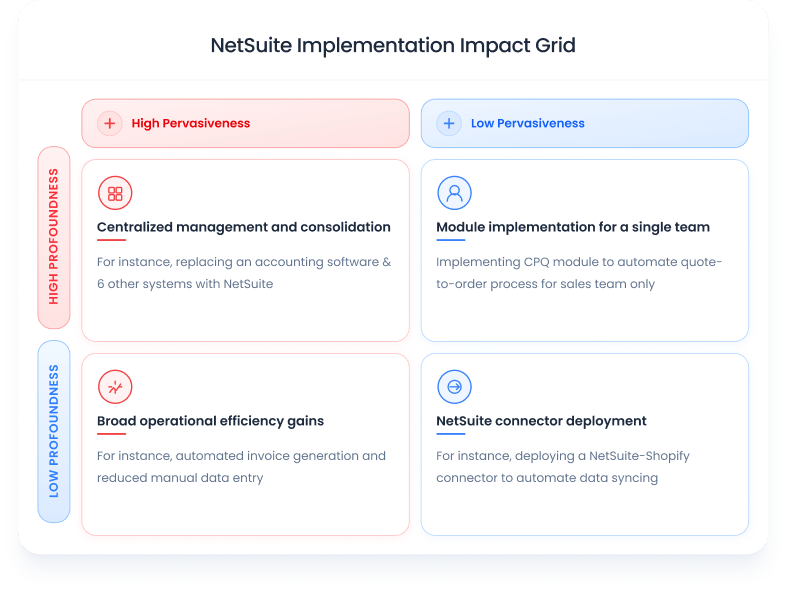
If you are using legacy systems and have years of data, you might be unsure about how the migration will happen or whether your data will be safe. You don’t need to worry. Our migration specialists ensure your enterprise data is moved from disconnected or legacy systems to NetSuite with zero data loss and minimal downtime.
Module Implementation

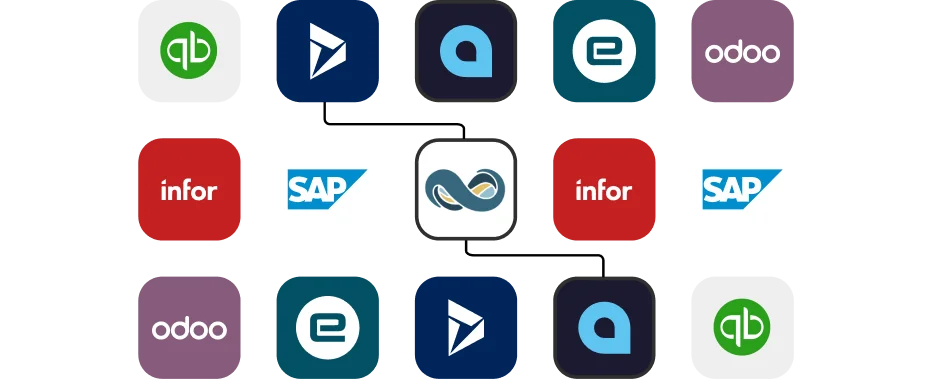
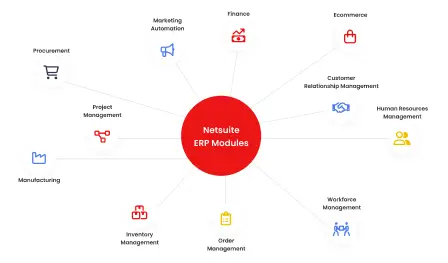
After implementation, businesses evolve, and new module requirements arise. Our team of experts helps you identify the right modules that align with your business needs and implement them seamlessly.
Module Implementation

SuiteSuccess Implementation

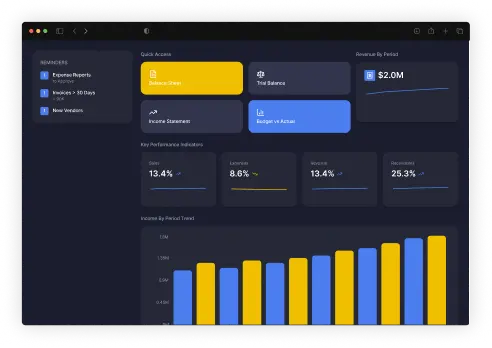
NetSuite offers pre-configured SuiteSuccess editions for businesses in core verticals, including manufacturing, retail, apparel, wholesale distribution, software, food and beverages, and more. We help you implement the NetSuite SuiteSuccess edition for your industry.
NetSuite Integrations

Connecting NetSuite with other systems shouldn’t be complicated. If you want to connect your ERP with ecommerce platforms, CRM systems, payment gateways, or any third-party tools, you don’t need another vendor.

We offer 35+ prebuilt native NetSuite connectors that integrate tightly with your ERP without relying on external middleware, or if you prefer Boomi, NetSuite Connector, Oracle Integration Cloud (OIC), and MuleSoft integrations, we can help you implement that as well

Integration of NetSuite with third party applications

NetSuite Customization

Out-of-the-box functionality works for some businesses, but others need more flexibility. We help you get the most out of your NetSuite investment by customizing your ERP to match your specific business requirements.
NetSuite Support

Once you go live on NetSuite, you need a team that works as an extension of your own. We support all your ongoing development and operational needs.

We work alongside your team to handle updates, fixes, and improvements with both go-live and post-go-live support. Our fixed-cost model and flexible team engagement models ensure your NetSuite ERP runs smoothly at all times.

Oracle NetSuite support for go live and post go live phases

NetSuite Consulting

Before implementation, it’s important to understand where you stand. Our consultants assess your current setup and guide you through the steps needed for a smooth NetSuite implementation.
Why Businesses Trust Folio3 for Implementing NetSuite?

There are many factors that make Folio3 one of the most reliable NetSuite implementation partners.

500+

Successful
implementations

98%

Go-live
success rate

11

NetSuite Alliance Partner Spotlight awards

02

NetSuite Partner of the Year awards

18+

Years of experience with NetSuite ecosystem

1M+

Consulting
hours

NETSUITE FOR ALL BUSINESSES

Who Needs NetSuite ERP Implementation?

Any business outgrowing spreadsheets and legacy systems can move to NetSuite to better manage its growing operations. Manual processes and disconnected systems across inventory, finance, CRM, and operations can make scaling difficult. NetSuite helps SMBs, mid-market firms, and enterprises unify their operations on a single platform. With NetSuite, businesses get a single source of truth and can take action using live ERP data across inventory, pricing, campaigns, and more.

Here are the business types that need to implement NetSuite:

Growth-stage SMBs

With a company size of 11-150 employees, these businesses have outgrown entry-level accounting tools like QuickBooks. Their implementation is phased and modular, as it starts with core financials and inventory management before gradually rolling out CRM and other modules over 6-12 months.


Implementing pre-configured SuiteSuccess templates is the most practical implementation approach for them since, at this stage, they do not require complex customizations. Their processes are already aligned with how NetSuite works.
Mid-market Firms

Mid-market Firms

With 151-1,000 employees onboarded, these organizations operate across multiple subsidiaries and warehouse locations. Their implementation is a 6-to-8 month hybrid project involving data migration from legacy ERPs or other tools, integration with third-party applications, and implementation of specialized modules.

Their implementation gains are substantial, as they perform financial reconciliation in days rather than weeks and get real-time inventory visibility across multiple warehouses, which reduces stock-outs, among other things.

Enterprises

These mature organizations with 1,000+ employees face complex supply chains, international divisions, and strict regulatory requirements like SOX, GAAP, and IFRS. Their ERP implementation is a large-scale transformation that spans 12-18 months.

The implementation of NetSuite for enterprises involves extensive customization via SuiteScript and complex data cleaning. The strategic benefits are great, as enterprises meet ASC 606/IFRS 15 compliance via advanced revenue recognition automation, and NetSuite’s platform agility lets them rapidly onboard newly acquired companies in weeks.

Enterprises
WHY IMPLEMENTATIONS FAIL

Why Do Up to 75% of NetSuite Implementations Fail?

Out of 75% of failed ERP implementations, 50% of them never get to see the go-live day. With a remarkable 98% go-live success rate, our NetSuite implementation experts have determined that the following three factors speed up the rate of implementation failure:

01

Rushed Implementations

One of the major reasons for NetSuite ERP implementation failure is the lack of patience by business leaders in rolling out the ERP software for their teams. This leads to rushed implementations, and then teams complain that even the basic processes are not running on the go-live day.

Our NetSuite consultant, Hani M., is of the view that rushed implementations is not the real symptom. He argues that symptoms include either the executive sponsor or the NetSuite implementation partner just glossing over user training and business leaders wanting to deploy the “new shiny object” without communicating with the teams that will use them the most.

Rushed Implementations (1)

02

No Change Management in Sight

Nasir Syed, digital transformation leader at Folio3, is of the view that most NetSuite implementations fail because of people rather than the software. And this opinion was shaped as a result of his leading dozens of digital transformation initiatives.

Without a change management plan, it is not possible to ensure successful implementation of NetSuite ERP. The finance and operations teams need to be taken into confidence, and their concerns should be heard and addressed

03

Data Hygiene Issues

Most businesses suffer from the problem of data hygiene. A typical organization has at least 20 systems in place to perform different functions, all of which have different versions of the data regarding products, pricing, inventory, payments, and more.

Simply migrating different versions of data from multiple systems to NetSuite won’t magically unify the data. Instead, it will create more problems for different teams, and a new kind of data trust gap will emerge among your teams.
IMPLEMENTATION RESCUE & RECOVERY

Recover Your ERP with Our NetSuite Implementation Rescue Services

If you’ve been wronged by your previous NetSuite implementation partner, you don’t need to worry. Connect with our experts who have rescued 70+ ERP implementations so far. We will discuss how to reimplement your NetSuite and will share a prioritized roadmap, so everything is as clear as day to you.
VERIFIED BUSINESS OUTCOMES

What Happens When NetSuite is Implemented Right?

Our NetSuite implementation services have helped InGenius Prep increase revenue, save time, and reduce costs. And, we’ve got proof of that.
College admissions consultants for high-achieving students, founded by former Yale admissions officers.

Industry

Education

Founded

2013

Headquarters

New Haven, CT

Annual Revenue

$8.6M

Team

~150 staff + 400+ counselors

What we implemented

45 days

Saved in month-end close

75% reduction in month-end close time, bringing it down from 60 days to 15 days

1,040 hrs

Saved in manual finance work

By automating revenue recognition and eliminating manual reconciliation work

20%

YoY revenue growth

By automating order-to-cash processes, scaling the business without adding headcount

100%

Error-free data entry

Standardized item creation keeps sales and financial data matched automatically for compliance

2

Financial audits cleared

GAAP accrual accounting positioned the company for private equity

1

New market launched

Centralized financials enabled a clean, rapid Saudi Arabia entity launch
Implementation APPROACH

How Does Folio3 Implement NetSuite for Your Business?

Most NetSuite implementation partners follow a template. On the other hand, our ERP implementation specialists have developed a structured yet flexible approach to implementing NetSuite. We do this without cutting corners on configuration, integration, or data integrity. Every phase has a defined owner, a fixed deliverable, and exit criteria.

Project Planning

We start by developing a comprehensive project plan that:

  • Outlines the essential NetSuite modules
  • Sets clear timelines
  • Defines key milestones
Resources are allocated, and responsibilities are assigned to make sure every aspect of the ERP implementation project is managed thoroughly. This approach helps us stay organized and proactively address any issues for a flawless and smooth implementation.

Personalization Requirements

Once the project plan has been developed, we:

  • Examine your current operations to pinpoint core business needs
  • Work closely with your team to understand what’s working
  • Identify gap areas that can be addressed with NetSuite implementation solutions
By gathering this information, we customize NetSuite to fit your specific requirements and enhance your business processes effectively.

Setup and Configuration

We then customize the NetSuite system to align with your business operations. We:

  • Configure user roles and permissions
  • Adjust fields and forms
  • Set system parameters to fit your workflows
With this step, we make sure that NetSuite integrates seamlessly with your existing processes and improves operational efficiency and usability.

Data Migration

All your crucial data is transferred from your legacy systems to the new NetSuite system with pinpoint accuracy and precision. We:

  • Map existing data to the new system
  • Clean it to resolve any inconsistencies
  • Conduct tests to verify accuracy
This step ensures that all historical data is correctly and completely imported and readily accessible in NetSuite.

Systems Integration

NetSuite is integrated with your existing systems and third-party applications to enable smooth data flow. We:

  • Set up data exchange protocols
  • Connect APIs to sync information across platforms
  • Ensure data never leaves your NetSuite instance
This minimizes manual data entry and connects all your favorite tools and software for smooth data flow.

User Acceptance Testing

Comprehensive training is provided to help your team get comfortable with NetSuite. We:

  • Prepare training materials and conduct workshops to ensure proficiency
  • Enable you to perform a thorough user acceptance testing (UAT)
  • Gain feedback from your team once they test the system
We then convert feedback into feedforward and make final adjustments before going live.

Cutover and Go-live

The transition to NetSuite is managed according to a detailed cutover plan. Final data migration is completed, and the system is configured for live use. We migrate data from:

  • Spreadsheets
  • QuickBooks
  • Sage
  • Dynamics
  • SAP
  • Infor
  • Acumatica
  • Workday
  • Xero
Our team supports you through the go-live process to address any issues and ensure that operations continue smoothly.

Maintenance and Support

After going live, we provide ongoing NetSuite support and maintenance. We:

  • Handle technical issues
  • Perform system updates
  • Make sure data security is intact
Our support team is available for any questions and to assist with system adjustments as your business grows.

case studies

NetSuite ERP Implementations That Have Won Us Awards

Folio3 holds a legacy of being an award-winning NetSuite ERP implementation partner with 11 NetSuite Alliance Partner Spotlight awards. Take a look at some of our award-winning implementations across businesses in the US and Canada.

Janco Electronics gained 100% visibility across manufacturing operations and achieved lot-controlled tracking by implementing NetSuite SuiteSuccess Manufacturing Premium.

JEII
baggu

Baggu implemented NetSuite SuiteSuccess AFA Premium to gain end-to-end visibility of their back inventory across multiple locations in real time, from pick to pack to ship.


educative

Educative Inc. mapped the course-to-revenue workflow by implementing NetSuite SuiteSuccess Software Standard. Folio3 provided post-implementation support through year-end close.

educative (1)
rebag (1)

Rebag implemented NetSuite SuiteSuccess AFA Premium to generate critical business reports, including financial and inventory analysis.

rebag
cc

Cooperative Computing implemented NetSuite SuiteSuccess Services Standard after moving from previously five disconnected systems.

cc2
CUSTOMER TESTIMONIALS

A Word from Our Customers

See what our customers have to say about the NetSuite ERP implementations that we did. Don’t just take our word for it. Also, check out our ratings on G2 and Clutch.

Overall, we have observed an estimated 40% reduction in manual data entry related to order processing & inventory management.

Adam Sharp

VP Operations

The team got us to live within our desired time frame even with additional development.

Pavan Parikh

Senior Business System Analyst

I feel so comfortable & confident having them involved. Folio3 has been supporting us over the last two years.

Kamelia Kaviani

CFO

IMPLEMENTATION COST

How Much Does a NetSuite Implementation Cost?

The cost of implementing NetSuite isn’t fixed. It depends on how complex your business is and how much customization you need. In most cases, companies can expect to invest anywhere from $50,000 to $200,000+ for implementation services alone

A basic setup with standard financials and minimal customization will sit on the lower end. Businesses with multiple entities, advanced workflows, or integrations (like CRM, ecommerce, 3PL, or inventory systems) will require a higher investment. The more tailored your system needs to be, the more time and expertise are involved.

It’s also important to think beyond just the initial setup. Costs can include data migration, user training, testing, and post-go-live support, all of which impact how successful your implementation will be.

If you want a detailed breakdown of how much a NetSuite ERP implementation costs and what drives the price up or down, check out our detailed NetSuite pricing guide.


IMPLEMENTATION COST FAQs

Commonly Asked Questions About NetSuite Implementation Cost

What is the average ROI for NetSuite ERP implementation?
Most businesses see a 100%-300% ROI within 1-3 years, mainly by saving time on manual, repetitive tasks that teams previously handled themselves. They also reduce operational costs by eliminating multiple disconnected systems, since with NetSuite, all your data lives in one unified platform.
If you look at real implementation outcomes as we have mentioned above, the gains are very tangible. Teams often save 20-40% of their time on financial processes because reporting, reconciliation, and consolidation become automated. Many companies reduce manual data entry by 50%+, which directly cuts down errors and rework.
On the operations side, better inventory visibility helps companies to avoid overstocking and stockouts, which means less money stuck in inventory and fewer lost sales. Businesses also eliminate the cost of maintaining multiple disconnected systems, since everything runs inside NetSuite.
So it’s not just “ROI” as a concept. It’s fewer hours spent on repetitive work, fewer costly mistakes, and better control over cash flow, all of which add up pretty quickly after go-live.  
Hidden costs usually come from underestimating the effort at the start of the project and timelines stretching longer than expected.
In many cases, the real “hidden” cost is underestimated hours. Some NetSuite vendors may initially quote a lower price to win the deal, but as the project progresses, additional effort gets billed, especially if things weren’t clearly scoped from the start.
It also depends on the engagement model. If it’s a fixed-price project, timeline delays may not directly impact cost. But in hourly or time-and-material models, any delay, like slow decision-making, feedback gaps, or extended testing, can increase the total cost.  
Another factor comes after go-live. You don’t always know how quickly your internal team will adapt to NetSuite. If adoption takes longer than expected, you may need extended support or training, which can add to the overall investment.  
At Folio3, we don’t underquote. In fact, we scope everything in detail first and then give you a final, all-inclusive estimate. Schedule a discovery call with our experts.
You can reduce costs by keeping the scope tight, preparing your data upfront, and avoiding mid-project changes.
The biggest cost drivers in a NetSuite implementation are time and complexity. If you start with a clear scope and stick to standard features instead of heavy customization, you’ll save both time and money.
Make sure your data is clean and ready before the project starts. This alone can cut down a lot of effort. Also, try to avoid adding new requirements mid-project, as that’s where timelines (and costs) usually increase.  
Finally, keep your internal team responsive during the project. Faster decisions and feedback help avoid delays, especially if you’re on an hourly engagement model.  
IMPLEMENTATION TIMELINE

How Long Does a NetSuite Implementation Take?

A typical NetSuite implementation takes 8 to 16 weeks, depending on the size and complexity of the business.

  • Small businesses usually take 8–12 weeks.
  • Mid-sized companies usually take 12–16 weeks.
  • Complex / enterprise projects usually take 16–20 weeks.
The implementation timeline is driven by how much needs to be configured, customized, and tested before going live. For example, for small businesses, a simple setup with standard workflows can be deployed quickly, while for mid-sized and enterprise projects the timeline is a bit extended due to more complex environments.
This includes multi-subsidiary structures, custom automations, multiple integrations, and different modules for different process areas. This requires additional planning and validation time.

Another key factor is business readiness. Companies that have clear processes from day 1, have clean data in their legacy systems, and fast decision-making cycles tend to implement much faster than those still defining workflows during the project.

For a deeper breakdown of timelines, you can explore our pricing & timeline guide

MPLEMENTATION TIMELINE FAQs

Commonly Asked Questions About NetSuite Implementation Timeline

What slows down a NetSuite implementation?
Even well-planned NetSuite implementations can run into delays when key areas are overlooked or underestimated. Small gaps in planning, data preparation, or communication can quickly impact the overall timeline. Below are some of the most common causes:
  • When the requirements are not clearly defined, the configuration process slows down, so it’s important to map out your workflows in advance.
  • When your data is messy or incomplete, it takes more time to clean and migrate, which delays the overall implementation.
  • Adding new features or changing requirements during the project often extends the timeline beyond the original plan.
  • When key stakeholders are not available for quick feedback or approvals, progress slows down significantly.
  • When you have multiple external systems to connect, additional time is needed for setup, testing, and validation.
A typical NetSuite implementation follows a structured sequence that starts with discovery and planning, where your business requirements and goals are defined. This is followed by system design and configuration, where workflows, roles, and customizations are set up based on your needs.
Next comes data migration and testing to ensure everything is accurate and working properly before launch. Finally, the system goes live with user training and ongoing support to ensure a smooth transition.

You can also watch our NetSuite implementation timeline video for a step-by-step walkthrough of how this process works.

Before starting a NetSuite implementation, it’s important to have a few key things in place to avoid delays and unexpected costs. Here’s what you should prepare:
  • Business requirements need to be clear. Define your current workflows, pain points, and goals before you reach out to an implementation partner.
  • Assign a decision-maker and key team members for faster approvals. Strong internal stakeholder alignment helps prevent delays during implementation.
  • Keep your data clean and organized so the migration to NetSuite ERP is smooth, accurate, and efficient.
  • Have a realistic budget and timeline in mind. Ensure expectations are aligned from day one with both your stakeholders and implementation partner.
  • Document your business processes, even at a high level. Mapping how your organization currently operates can significantly reduce implementation time.

In short, the more prepared you are, the smoother and faster your implementation will be. It also helps your implementation partner to give you a more accurate quote and timeline from day one. You can reach out to the Folio3 team for a personalized NetSuite Implementation quote.


Are You Ready to Implement NetSuite?

Connect with NetSuite implementation experts who are ready to discuss your NetSuite implementation goals and help you prepare for the change the ERP will bring to your business operations. Go live by partnering with the #1 NetSuite implementation agency.
FAQs

Common Questions CXOs Ask About Implementing NetSuite

What makes a NetSuite implementation partner the best? What criteria actually matter?
The criteria for evaluating the best NetSuite implementation partner include:  
  • Industry experience and proven track record of implementations
  • Technical expertise and certifications
  • Full-service offering from discovery to go-live and post-go-live support
  • A proven implementation methodology and efficient project management
  • Vendor recognition through NetSuite Alliance Partners Spotlight awards
The average cost of NetSuite implementation for a mid-size company is $70,000 to $150,000. What drives the price up are multiple factors, including the SuiteSuccess edition you’re using, customization costs, and integration costs. This could easily add up to $150,000 to $300,000.
The significant variation in NetSuite implementation costs comes down to a combination of your unique business needs, the partner’s pricing model, and how well a project is defined from the start. The best way to know if a quote is fair is to understand the key cost drivers and the different ways partners can bill for their services.

The following specific services are expected from a NetSuite implementation support partner:

  • Validating that everything is functioning as intended in your NetSuite ERP
  • Hypercare support to quickly resolve any post-launch issues
  • Prioritization of faster resolution times and diagnosing issues within hours
  • Ongoing system administration during post-go-live support

We'd Love to help you with all your NetSuite needs

Let’s Discuss Your NetSuite Needs

Hello, How can we help you?

Get a 45-Minute
NetSuite Consulting Session

Worth $2,000 for Free

Grab the opportunity to speak with one of our top-rated consultants to get expert guidance on your NetSuite needs.